Gold Market Sees a Sharp Turn: From Frenzy to Caution
Introduction
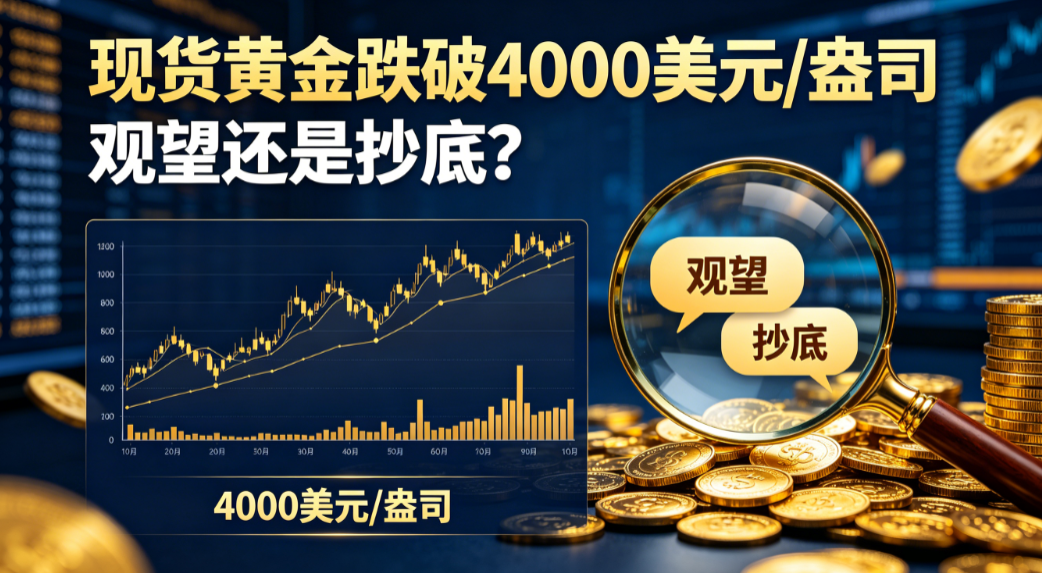
In 2024, the gold market is playing out a dramatic shift from noise to quiet. On June 24, sentiment turned sharply lower, gold prices pulled back significantly, and the previous one-way rally was completely reversed. London spot gold fell below the key support of $4,000/oz; Shanghai gold also weakened in step, losing the 900 yuan/gram round level. This round of price adjustment not only shattered many investors' profit expectations, but also triggered deeper reflection on the logic of gold investing.
From Peak to Trough: A Multi-Dimensional View of the Pullback
Looking back to the start of the year, the gold market was overheated. International gold prices repeatedly set new all-time highs, domestic investment demand surged, investors rushed to add gold ETFs, buy investment bars, and physical gold shops saw buying frenzies. Major institutions stayed bullish, and the market's long bias reached a peak. Yet within just a few months, the trend completely reversed.
On the chart, the recent international gold market has clearly fallen. As of June 24, London spot gold had already broken below the important psychological level of $4,000/oz, showing a pronounced pullback. The domestic market weakened in tandem, with Shanghai gold losing the 900 yuan/gram round number and settling in the 870+ yuan/gram range.
Tan Haojun, a part-time professor at Zhongnan University of Economics and Law, said in an interview that this pullback results from multiple factors, first and foremost the excessive earlier rally and overheated speculation. Gold itself has core properties of reserve preservation, hedging, and risk resistance, but its price cannot rise without limit. Previously, international gold soared above $5,500, showing obvious valuation bubbles.
Notably, as gold remained weak, Wall Street investment banks that had been broadly bullish also adjusted their expectations. Bank of America stated bluntly that its earlier $6,000/oz target is now basically unattainable; Deutsche Bank sharply cut its 2026 gold forecast; Goldman Sachs and Citigroup also lowered short-term gold targets. This shift in institutional expectations further intensified bearish sentiment.
Capital Trend Reversal: Gold ETFs Face Concentrated Redemptions
The continued decline in international gold prices has directly reversed the heat in China's gold investment market. In the second quarter, domestic gold ETFs saw large-scale redemptions. The year-start inflow wave has completely reversed, and most products have entered sustained net outflows.
According to Wind data, gold ETF trading was hot in Q1 this year. Leading products such as Huaan Gold ETF and Guotai Gold ETF both saw net inflows exceeding 10 billion yuan. But since March, international gold began to fall, and from Q2 onward gold ETFs also saw concentrated redemptions. Huaan Gold ETF became a major outflow target, with net outflows exceeding 9 billion yuan since the start of Q2; Guotai Gold ETF and E Fund Gold ETF each saw more than 2 billion yuan in net outflows over the same period.
Tan Haojun said the decline in gold prices and related ETF volatility is a normal market linkage. Many investors still chase rallies and dump on weakness: they follow the herd when prices rise and panic-sell when prices fall. In this environment, ordinary retail investors are clearly less willing to buy gold stocks, and rushing into related names carries relatively high investment risk.
Investor Sentiment Splits: Who Is Anxious, and Who Is Waiting
As gold continued to correct, investor sentiment split clearly. Those holding positions at low prices remained calm, while those entering at highs felt the pain.
Ms. Li said she slightly increased her position in a gold ETF when gold was just above 900 yuan/gram, and planned to add in batches if it kept falling. Since she started investing in gold years ago, her average cost is low; even if gold remains weak, the difference is only between making more or less money, so overall pressure is limited. For that reason, she does not recommend that friends without low-cost positions blindly buy the dip, in order to avoid being trapped at high levels.
Compared with low-cost buyers, investors who missed the rally and chased higher prices are in a more passive position. Ms. Hu, who had been following gold closely, hesitated to buy when prices surged above 1,000 yuan/gram because the level seemed too high. When gold fell back to around 930 yuan/gram, she decisively bought gold accumulation plans and, thinking long term, did not take profits in time. But gold kept falling below 900 yuan, leaving her position in a loss. In addition, she also bought gold stocks, and the double loss made her helplessly say she had already "gone numb" to the drop.
Return to Rationality: Long-Term Logic and Real-World Choices in Gold Investing
As gold repeatedly lost key levels, the investment mood in the market has fully reversed. Unlike the "mad rush" at the beginning of the year, most investors are no longer blindly following the crowd; wait-and-see has become the mainstream sentiment. Gold investing has moved from "frenzied rally chasing" back to calm observation. This is both a sign of market rationality and the inevitable result of investor education.
Tan Haojun believes that even if gold still has room to pull back, it remains an indispensable core asset in portfolio allocation. Compared with most financial products, gold's safe-haven attribute is more prominent, and over the long term it remains an important fallback asset for investors. However, timing matters greatly; if the purchase level is unreasonable, investors will face loss risk from price swings. Overall, gold is more suitable for medium- to long-term allocation and not for frequent short-term trading.
Conclusion
This round of adjustment in the gold market is both a necessary correction to earlier excessive speculation and an important lesson in risk education for investors. The shift from frenzy to caution reflects the market's gradual return to rationality. For those still hesitating about whether to enter the market or buy the dip, understanding the logic behind market volatility and building a long-term, steady investment mindset may be more important than chasing short-term ups and downs. Gold's safe-haven attribute will not disappear because of a short-term correction, but rational investment decisions must always be built on sufficient understanding and risk control.