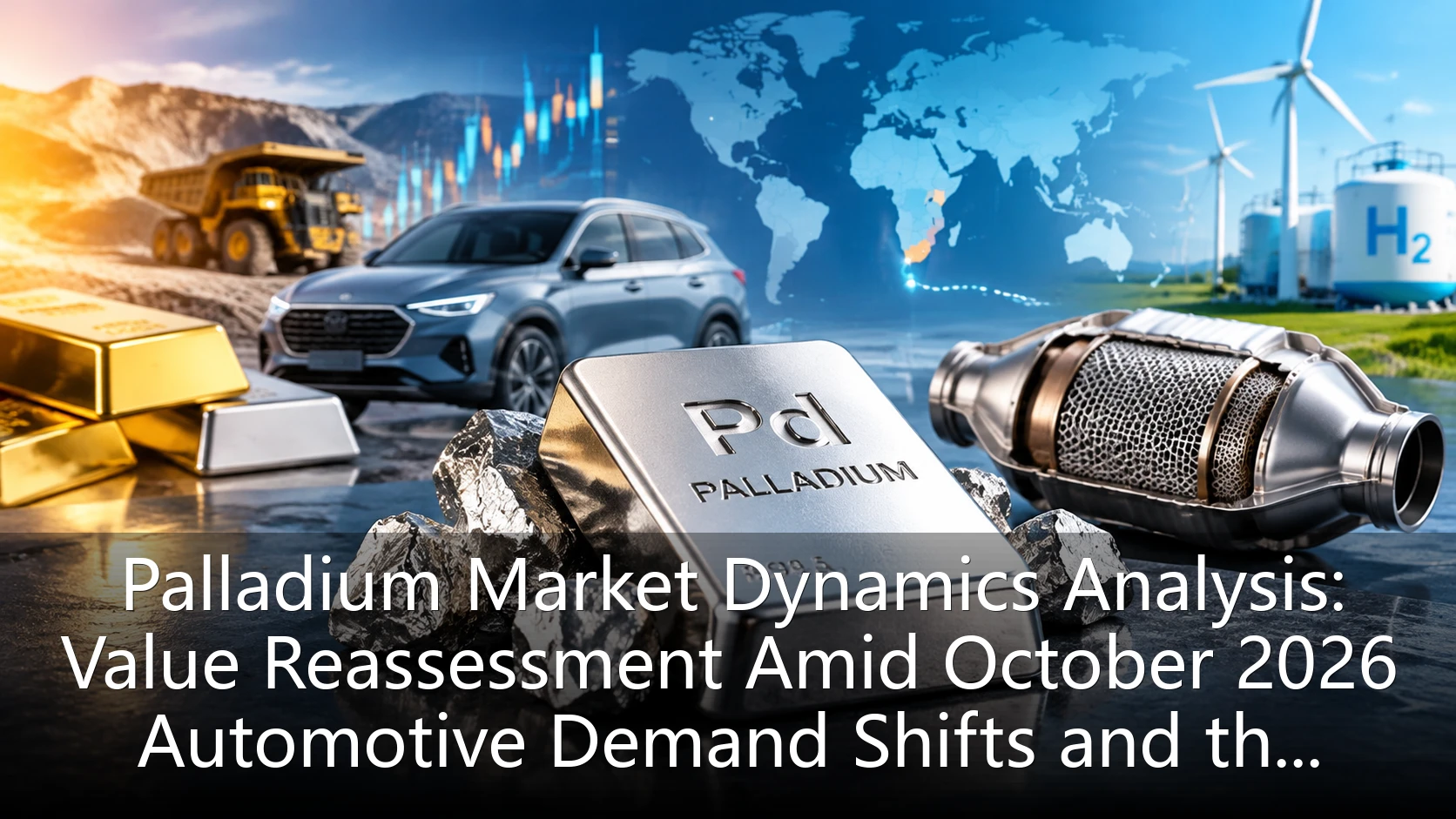
In mid-October 2026, the precious metals spotlight was almost entirely on gold and silver: safe-haven capital kept flowing in, central bank gold buying remained red-hot, and precious metals ETF position changes dominated financial headlines. Yet beyond the gold and silver rally, palladium—the smallest yet most volatile member of the precious metals family—is undergoing a less conspicuous but profoundly significant structural change. For investors seeking differentiated allocation, understanding the latest palladium market dynamics may be an essential piece of Q4 precious metals investing.
1. A Unique Market Ecosystem: Small Size Breeds High Volatility
Among the four major precious metals—gold, silver, platinum, and palladium—palladium is the most niche. Annual global mine supply of palladium is a fraction of gold output, with limited market depth and thin liquidity, making it extremely sensitive to marginal news and naturally more volatile than gold and silver. Historically, palladium briefly surged above the rare level of $3,000 per ounce in early 2022, then fell sharply as demand expectations weakened. These dramatic swings repeatedly remind the market: palladium has never been a quiet asset.
Extreme supply-side concentration further amplifies volatility. Russia and South Africa together account for the vast majority of global mine supply, so any ripple in supply chains, trade policy, or mining operations can sharply disrupt prices in a very short time. This structure—a small market with heavy concentration—makes palladium a classic news-driven asset and offers short-term traders far greater room for maneuvering than gold or silver.
2. The Demand Base: Contraction and Resilience in Automotive Catalysts
Over 70% of palladium demand comes from automotive exhaust catalysts, with three-way catalytic converters in gasoline vehicles as its largest application. As vehicle electrification advances worldwide, battery electric vehicles no longer require platinum-group metal catalysts, so concerns over palladium's long-term demand persist—this has been the core logic suppressing palladium's valuation in recent years.
But the pace of demand collapse may be slower than pessimists expect. On one hand, hybrid vehicles still rely on internal combustion engines, with per-vehicle palladium loading equal to or even higher than conventional gasoline cars, and hybrid penetration has risen rapidly in major global markets over the past two years, objectively providing a cushion for palladium demand. On the other hand, rising vehicle adoption in emerging markets continues to support growth in gasoline and hybrid fleets. Combined, these forces suggest palladium's demand decline is more likely a gentle slope than a cliff.
3. Supply Landscape: Triple Constraints of Concentration, Recycling, and Costs
- Highly concentrated supply: Russian mining giants and South African platinum-group producers dominate global mine supply; supply elasticity is low, and the sector has long been plagued by geopolitical tensions, logistics corridors, and sanctions risks;
- Steadily growing recycling: Recycling of spent automotive catalysts has become an important supplement to palladium supply, but recovery volumes are closely tied to fleet age structure and recycling technology, making explosive near-term growth unlikely;
- Rising cost support: South African producers are weighed down by unreliable power supply, declining ore grades, and cost inflation; some high-cost capacity faces closure pressure, building a downside buffer for palladium prices.
These triple constraints point to one conclusion: palladium supply lacks both the ability to expand rapidly and unlimited room for compression. Once demand shows better-than-expected marginal improvement, the supply-demand balance can quickly tip toward shortage—precisely the structural root of palladium's repeated sharp rallies in history.
4. The Platinum-Palladium Game: A Seesaw of Substitution and Reverse Substitution
Understanding palladium is impossible without its seesaw relationship with platinum. In recent years, the platinum-palladium price spread has completed a historic reversal, with platinum moving from deep discount to relative premium—the core driver being the substitution of palladium with platinum in catalyst formulations. When palladium prices are elevated, automakers and catalyst makers have strong incentives to switch to platinum or platinum-palladium hybrid solutions; as the spread narrows or even reverses, the economic incentive for substitution weakens, and some demand may flow back.
Meanwhile, platinum demand from the hydrogen economy—used in electrolyzers and fuel cells—is gaining dual momentum from policy and capital, giving platinum the upper hand in the precious metals narrative and indirectly suppressing palladium's relative appeal. For investors, the platinum-palladium price ratio has therefore become a key thermometer for observing rotation between the two metals, its logic consistent with the gold-silver ratio discussed previously on this site: extremes in the ratio often signal the opening of an allocation window.
5. Q4 Palladium Market Watchlist
Looking ahead to Q4 2026, the following threads deserve a place in your monitoring framework:
- Auto production, sales, and hybrid penetration: Changes in vehicle sales structure across major global markets directly determine the quality of palladium's demand base;
- Supply-side news: Russian supply flows, South African mining operations and power conditions—any anomaly could trigger sharp price swings;
- Spillover from gold and silver: If gold and silver stay strong, warming sentiment across the precious metals sector could drive palladium to play catch-up;
- Macro liquidity and the US dollar: A looser rate environment also transmits to palladium, which carries a strong industrial character;
- Inventories and fund flows: Exchange inventory drawdowns and marginal changes in investment demand are key indicators for verifying trend sustainability.
Allocation Approach: A Satellite Position, Not a Core Holding
It bears emphasizing that palladium's violent volatility and limited liquidity make it better suited as a satellite position within a precious metals portfolio rather than a core asset. Conservative investors may treat palladium as a signal light for observing rotation within precious metals, keeping main positions in gold and silver; aggressive investors can strictly control position sizing, stay away from high leverage, and build positions in batches on oversold prices to capture mean-reversion opportunities. Whichever path you choose, it should serve your portfolio's overall hedging objectives, preventing single-asset volatility from eroding overall returns.
Overall, the palladium market in October 2026 is in a transitional phase where old logic is loosening and a new equilibrium has yet to form: electrification's long-term pressure is real, but the rise of hybrids, supply rigidity, and cost constraints are equally reshaping its price elasticity. Amid gold- and silver-dominated market sentiment, an independent palladium rally may be brewing. For investors, understanding the structure matters more than chasing hot themes—in precious metals investing, what truly determines returns is often a clear-eyed reading of supply-demand dynamics, not momentary price impulses.