August 2026 Precious Metals Hedging Strategy: Asset Preservation in a World of Global Uncertainty
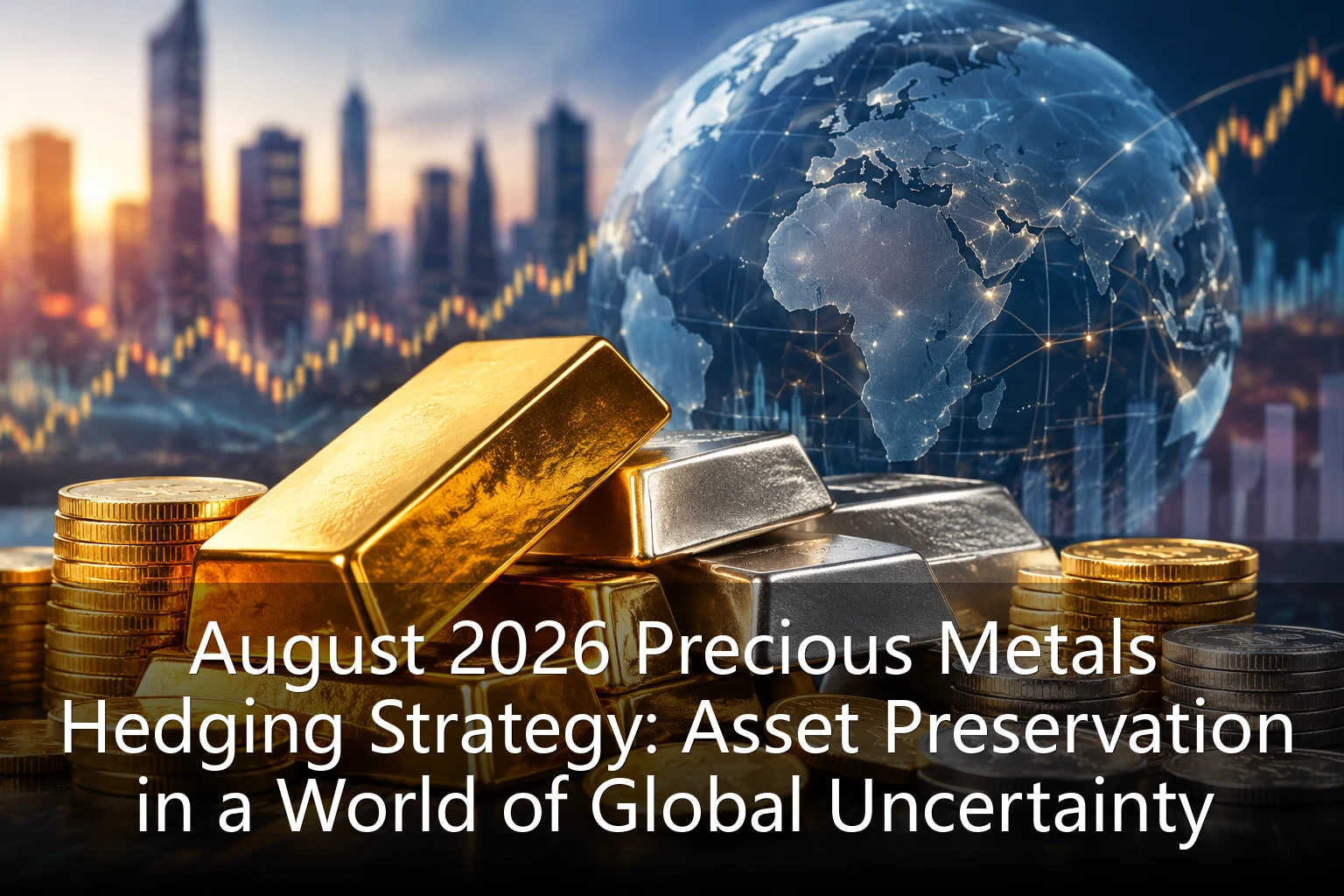
In August 2026, the global economy faces multiple uncertainties, with factors like geopolitical conflicts, inflationary pressures, and central bank policy shifts intertwining, making the value of precious metals as traditional hedging assets prominent again. Precious metals such as gold and silver not only have a long-standing preservation function but also provide stable returns in market volatility. This article will analyze the current market environment, explore the core elements of precious metals hedging strategies, and offer practical allocation recommendations for investors to safeguard assets in turmoil.
Current Market Background: Hedging Demand Amid Multiple Interwoven Risks
In August 2026, the global economic situation is complex and volatile. On one hand, inflationary pressures persist in major economies like the US, Europe, and Asia. Although central banks have implemented rate hikes, inflation has been slow to recede, keeping real interest rates low. On the other hand, geopolitical risks have intensified, such as regional conflicts and trade frictions, further increasing market uncertainty. Additionally, global debt levels continue to rise, and sovereign credit risks are increasing, weakening investors' confidence in traditional financial assets. In this context, the appeal of precious metals as hedging assets has significantly increased, with their prices showing an upward trend recently—gold breaking the $2,600 mark and silver also hitting new highs.
From an industry perspective, global central bank gold purchases remain active. According to the latest report, global central bank gold reserves increased significantly in the first half of 2026, especially as emerging market central banks stepped up gold purchases to diversify foreign exchange reserves. Meanwhile, gold ETF holdings have reached a new high for the year, indicating strong hedging demand for precious metals among institutional investors. These factors jointly support precious metal prices and reinforce their role as hedging tools.
Analysis of Precious Metals' Hedging Value: Combining History and Reality
Precious metals, especially gold, have long been regarded as hedging assets. During historical turbulent periods, such as financial crises or wars, gold often retains or even increases in value. Its hedging value stems from several key factors: first, gold's scarcity and anti-inflation properties allow it to preserve value during currency depreciation. Second, gold's high liquidity makes it easy to trade and quickly convert to cash. Additionally, gold has a low correlation with traditional assets like stocks and bonds, enabling risk diversification in investment portfolios.
In the current market, silver's hedging attributes are also gaining attention. Silver not only has industrial demand, such as in the electronics and solar energy industries, but also possesses precious metal properties. When inflation rises and geopolitical risks intensify, silver prices often rise in tandem with gold, but with higher volatility, potentially offering higher returns. Other precious metals like platinum and palladium also have hedging value in specific situations. Platinum, in particular, has an expanding supply-demand gap, and the green energy transition drives demand growth, making it a potential long-term allocation asset.
Core of Hedging Strategies: How to Allocate Precious Metal Assets
When allocating precious metals as hedging assets, investors should consider the following key strategies:
- Long-term Gold Holding: Gold is the core asset for hedging. It is recommended that investors hold it long-term as a stabilizer for their investment portfolio. Long-term holding smooths short-term volatility and allows them to enjoy its preservation and appreciation characteristics.
- Diversified Allocation of Silver: Silver has both industrial and hedging properties, making it suitable as a supplement to gold. When inflation rises or the economy recovers, silver's industrial demand may push up its price, increasing the flexibility of the investment portfolio.
- Focus on ETFs and Physical Investment: Gold ETFs (such as SPDR Gold Shares) and physical gold (such as gold bars, coins) are common investment methods. ETFs have high liquidity and are easy to trade; physical gold provides direct ownership and is suitable for long-term holding.
- Combine Technical Analysis and Fundamental Analysis: In short-term trading, make decisions by combining technical indicators (such as moving averages, RSI) and fundamental factors (such as inflation data, central bank policies). For example, when inflation data exceeds expectations, gold prices may rise, and investors can consider increasing their holdings.
- Risk Management: Set stop-loss points and avoid excessive leverage. Precious metal prices are highly volatile, especially silver, so investors need to carefully control their positions and diversify investments to reduce risks.
Industry Interpretation: Current Market Drivers
In August 2026, the main drivers of precious metal prices include:
- Inflationary Pressure: Global inflation rates remain above central bank targets, and real interest rates are negative, making the opportunity cost of holding cash high. The demand for gold as an anti-inflation tool rises.
- Geopolitical Risks: Regional conflicts and trade tensions boost hedging sentiment, leading investors to turn to safe assets like gold.
- Central Bank Policies: Central banks like the Federal Reserve may cut interest rates in the future, reducing the opportunity cost of holding gold and stimulating demand. At the same time, central bank gold purchases directly increase market supply and support prices.
- Economic Data: Data such as the US non-farm payrolls and ISM Manufacturing PMI, if showing signs of economic recession, will strengthen hedging demand. Conversely, if the data is strong, it may suppress gold's short-term gains, but the long-term trend remains bullish.
Additionally, technical factors cannot be ignored. The gold-silver ratio (the ratio of gold to silver prices) recently fell below 55, a historic low, indicating strong silver performance and possibly signaling the continuation of the precious metals bull market. Investors can monitor changes in the gold-silver ratio as a allocation signal.
Investment Recommendations: 2026 H2 Hedging Allocation Guide
Based on the current market environment, here are specific recommendations for precious metals hedging allocation in the second half of 2026:
- Gold Allocation: It is recommended to allocate 5%-10% of the investment portfolio to gold in the form of physical gold or ETFs. Hold long-term, buy on dips, and set a target price of $2,800-$3,000.
- Silver Allocation: Silver is highly volatile and suitable for investors with higher risk tolerance. The allocation ratio can be set at 2%-5%, focusing on industrial demand recovery and inflation data.
- Platinum and Palladium: As supplements, platinum has an expanding supply-demand gap, and the green energy transition drives demand, so a small allocation (1%-2%) is recommended. Palladium is affected by the automotive industry, so careful evaluation is needed.
- Regular Rebalancing: Review the investment portfolio quarterly and adjust the precious metals allocation ratio according to market changes to ensure risk diversification.
- Focus on Emerging Markets: Emerging market central banks are active in gold purchases, so investors can focus on related ETFs or direct investments to capture long-term trends.
Conclusion: The Long-term Value of Precious Metals Hedging
In August 2026 and beyond, the status of precious metals as hedging assets will continue to be consolidated. Although short-term market volatility is inevitable, in the long run, precious metals like gold and silver have irreplaceable value in combating inflation, geopolitical risks, and economic uncertainty. Investors should include precious metals in their asset allocation, combining long-term holding and short-term strategies to achieve asset preservation and appreciation. Through reasonable allocation, wealth can be safeguarded in volatile markets, and investment opportunities can be seized.