Asia-Pacific Demand Becomes Growth Engine for Global Precious Metals Market
July 29, 2026, Singapore – The center of gravity of the global precious metals market is accelerating its shift eastward. According to the latest Asia-Pacific Gold Demand Report released by the World Gold Council, total gold consumption and investment demand in the Asia-Pacific region reached 1,200 tons in the second quarter of 2026, up 8.5% year-on-year, accounting for more than 60% of global demand for the first time. Among them, China's gold jewelry consumption grew 12% quarter-on-quarter, India's gold imports hit a three-year high, and retail investment demand in Southeast Asian countries such as Vietnam and Indonesia also warmed significantly.
At the same time, industrial demand for silver also performed strongly in the Asia-Pacific region. The photovoltaic industry and electronic component manufacturing drove silver consumption, with silver imports in Japan, South Korea and China growing 15%, 9% and 22% respectively. For platinum and palladium, due to the continuous expansion of auto catalyst demand in emerging Asian markets (especially China and India), platinum and palladium prices hit quarterly highs in early July.
Singapore: A Full-Chain Hub from Trading to Storage
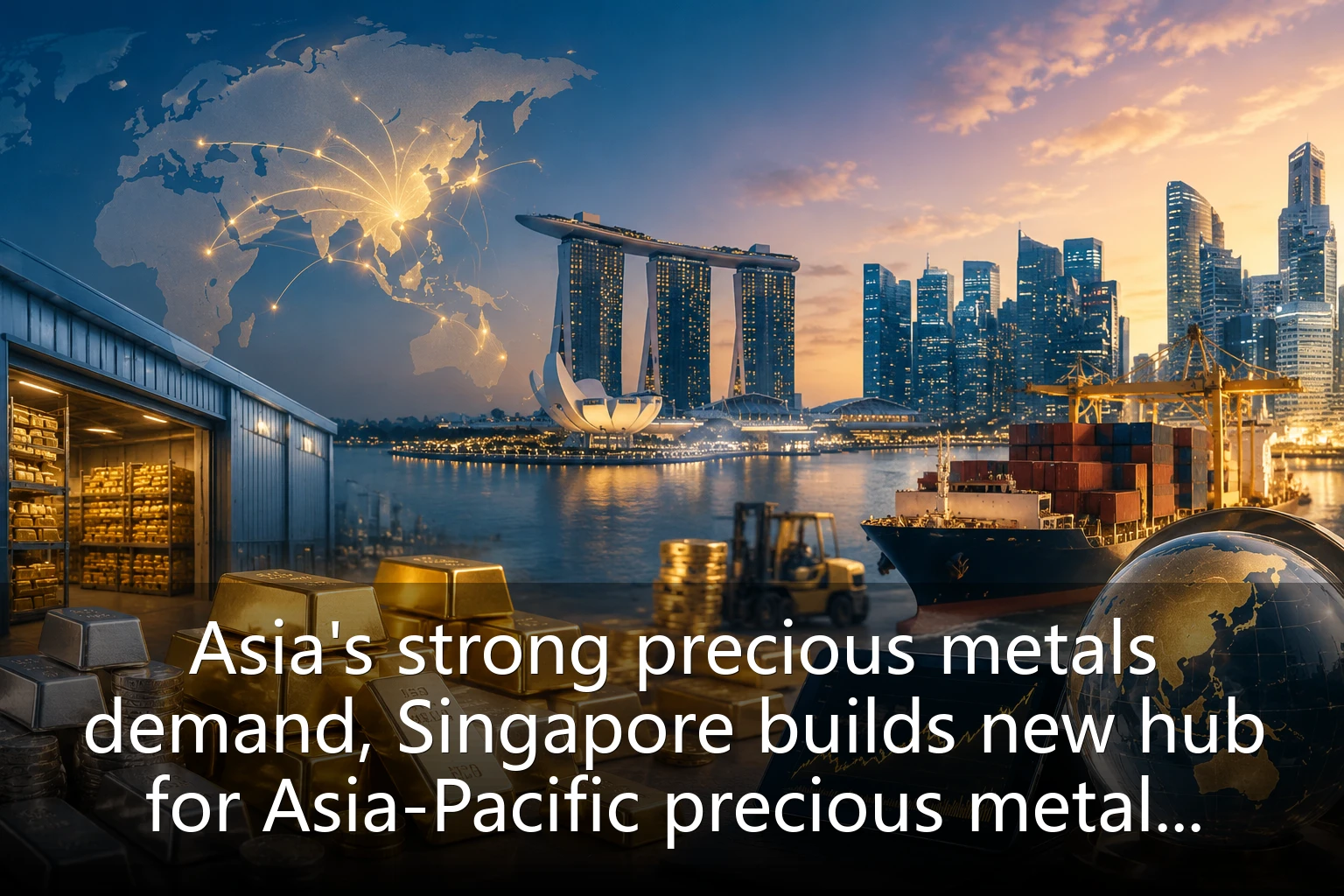
Faced with the growing demand for precious metals trading and storage in the Asia-Pacific region, Singapore is rapidly emerging as a regional core hub with its unique advantages. On July 28, 2026, the Singapore Exchange (SGX) announced a deep partnership with the London Bullion Market Association (LBMA) to launch gold futures contracts during Asian hours, further attracting global liquidity. In addition, the expansion plan for the free port precious metals warehouse near Singapore Changi Airport was approved this month, increasing storage capacity to 8,000 tons, making it one of the largest gold bar and silver ingot storage facilities in Asia.
A responsible person from the Monetary Authority of Singapore (MAS) said, "We are committed to providing one-stop services for Asia-Pacific investors through tax incentives (such as exemption of goods and services tax on gold investment), strict gold bar certification standards, and efficient supply chains." Currently, more than a dozen international precious metals refiners and traders have set up regional headquarters or storage centers in Singapore, including Switzerland's MKS PAMP, Japan's Tanaka Precious Metals, and others.
Policy Benefits Create 'Singapore Premium'
With tariff and non-tariff barriers still existing for gold imports in China and India, Singapore's transshipment advantages as a free trade port are prominent. In the first half of 2026, the volume of gold transshipped via Singapore to India increased 35% year-on-year, and silver to China increased 28%. Market analysts point out that Singapore is gradually replacing some functions of London and Switzerland, forming a unique 'Singapore premium' – that is, spot quotes for the same precious metal in Singapore are on average 0.5%-1% higher than in the London market, reflecting regional supply-demand tightness and logistics cost advantages.
Investor Perspective: How to Allocate Precious Metals in the Asia-Pacific Market
For global investors, the rise of the Asia-Pacific precious metals market means new opportunities. Trading volume of gold ETFs on the Singapore Exchange grew 40% in the first half of the year, while the number of precious metals custody accounts opened by Singapore banks surged. Financial experts suggest investors consider the following strategies:
- Diversify regional allocation: Store some precious metals assets in Singapore to hedge geopolitical and currency risks.
- Use futures hedging: Trade gold futures during Asian hours on SGX to lock in prices and reduce overnight volatility risk.
- Watch for silver catch-up: Strong industrial demand from photovoltaics and other sectors, and the current gold-silver ratio at a historic high of 85:1, silver may have greater upside potential.
Industry Outlook: Future Landscape of Asia-Pacific Precious Metals Market
Industry experts generally expect that the Asia-Pacific region will contribute more than 70% of global precious metals demand in the next five years. Singapore's strategic position as the 'Oriental Gold Capital' will be further consolidated. Meanwhile, the Shanghai Gold Exchange (SGE) and Tokyo Commodity Exchange (TOCOM) are also actively upgrading their trading systems, forming a multi-center competitive landscape. However, Singapore's advantages in regulatory transparency, legal system, and free flow of international capital make it an irreplaceable 'Asian fulcrum' in the global precious metals market.
Precious metals analyst Wang Wei (pseudonym) pointed out, 'Singapore's success is no accident – it is the result of the combined effects of Asia-Pacific economic integration, the explosion of demand from China and India, and the reshaping of global industrial chains. For investors, now is the best time to reassess the Asia-Pacific precious metals layout.'