Fed Holds Steady as Rate-Cut Signals Become Clearer
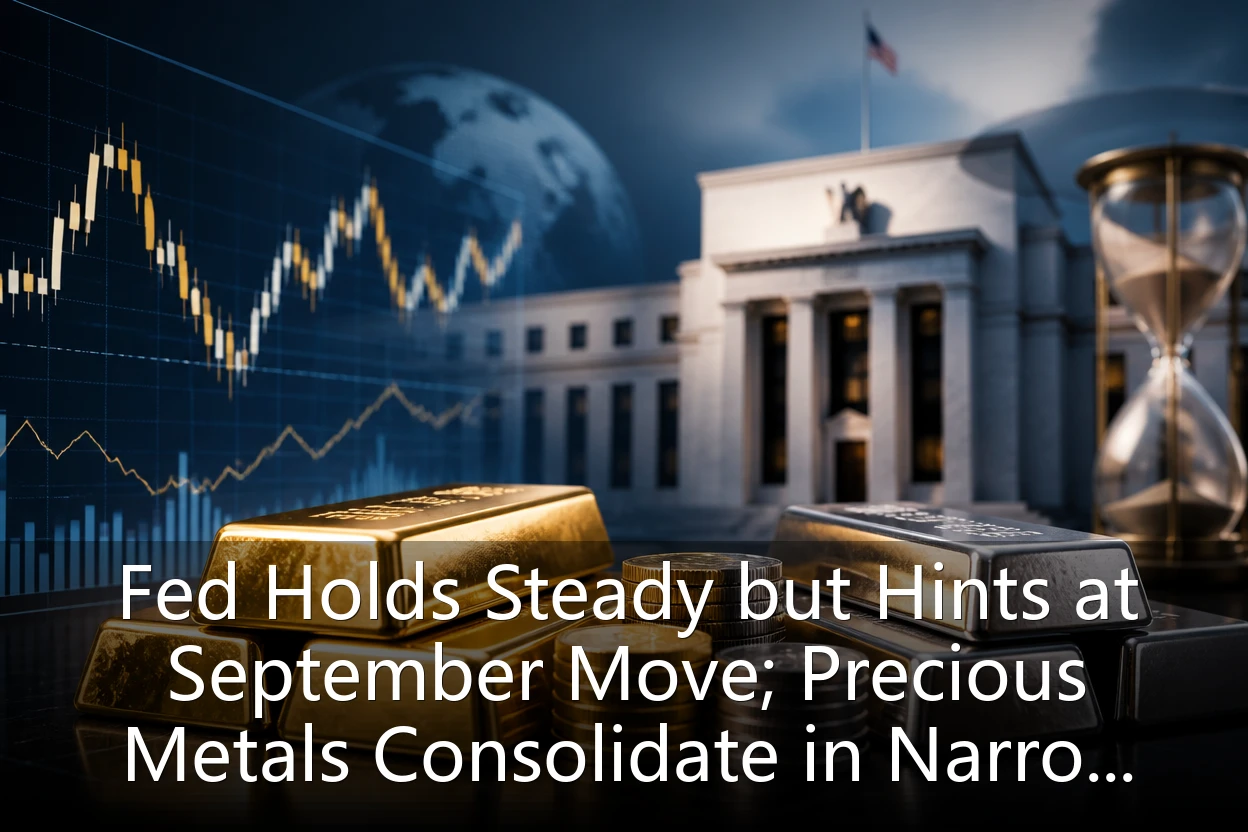
On August 2, 2026, the highly anticipated Fed August FOMC meeting concluded. The Federal Open Market Committee voted unanimously to maintain the federal funds rate target range at 5.25% to 5.50%, marking the 12th consecutive month at this level since the last hike in September 2025. However, markets focused more on the policy statement and Chair Powell's press conference wording than the rate decision itself.
The statement removed previous hawkish language about "inflation risks remaining elevated" and acknowledged that "inflation has made modest progress toward the 2% target." It also added a description of "slowing momentum" in the labor market, signaling a shift in the Fed's assessment of the economic outlook. In the subsequent press conference, Powell said that if inflation data continues to cooperate, the September meeting "could be an appropriate time to adjust policy." This was widely interpreted as opening the door for the Fed to start a rate-cutting cycle this year.
Weaker Dollar and Rate Cut Pricing Provide Dual Support for Precious Metals
Influenced by the Fed's dovish signals, the US dollar index fell sharply after the decision, briefly dipping below the 98 level to hit a new low since 2024. Meanwhile, interest rate futures markets showed traders' probability bets on a September cut surging from 68% before the meeting to 82%, with expectations for three cumulative cuts this year also heating up.
For precious metals, a weaker dollar and stronger rate cut expectations create a double tailwind. A depreciating dollar makes dollar-denominated gold cheaper for holders of other currencies, stimulating demand, while rising rate-cut expectations lower the opportunity cost of holding non-yielding gold. As of the Asian session on August 2, spot gold was trading near $2,425/oz, up 0.3% on the day, showing a pattern of narrow-range consolidation. Silver performed even more strongly, with spot silver firmly above $30.50/oz and a daily gain exceeding 1%.
Silver's Industrial Demand Shines as Gold/Silver Ratio Retreats from Highs
Silver's strong performance is closely tied to its dual nature. On one hand, the financial tailwind from rate-cut expectations broadly supports both gold and silver. On the other, the ongoing global energy transition and infrastructure buildout provide solid fundamental support for silver's industrial demand. Recently released global manufacturing PMI data shows stabilizing industrial activity in major economies, with photovoltaic installations and 5G infrastructure construction keeping silver consumption elevated.
As a result, the gold/silver ratio fell from a recent high near 85 to 79.3. The gold/silver ratio is often viewed as a key metric for relative valuation between gold and silver. When market risk appetite improves and industrial demand expectations strengthen, silver tends to show greater elasticity than gold, pushing the ratio lower. The current retreat in the ratio reflects a market that, while pricing in rate cuts, has not ignored the real economy's support for industrial precious metals. For investors, this signal is worth noting: silver's industrial demand elasticity may give it greater upside potential during a rate-cutting cycle.
Geopolitical Risks Persist, Providing a Floor for Safe-Haven Demand
Beyond macroeconomic factors, geopolitical risks remain a significant support for precious metals. While tensions in the Middle East have eased recently, long-term structural contradictions remain unresolved. The conflict in Eastern Europe remains stalemated, and the Global Geopolitical Uncertainty Index remains at historically high levels. These factors continue to provide a floor for safe-haven assets like gold, limiting the downside room for gold prices during corrections.
The latest data from the World Gold Council shows that while global central bank gold purchases slowed in Q2 2026, they remained in net buying territory overall. Emerging market central banks, driven by strategies of foreign reserve diversification and de-dollarization, remain long-term strategic buyers in the gold market. This persistent structural demand builds a solid long-term floor for gold prices.
Outlook: Consolidation Before a Breakout
Looking ahead, the precious metals market is likely to continue consolidating in the near term. Gold prices have been range-bound between $2,400 and $2,450 for several weeks, with bulls and bears awaiting clearer macro signals to choose a breakout direction. Key upcoming events include the US July non-farm payrolls report on August 15 and the Jackson Hole global central bank symposium at the end of August. If the jobs report confirms further cooling in the labor market, or if Powell releases a clearer rate-cut signal at Jackson Hole, gold could break above historical resistance and challenge new highs above $2,500.
For investors, the current phase may suit a phased position-building strategy, using pullbacks in the consolidation to gradually increase gold and silver holdings. In terms of allocation, considering silver's elasticity advantage in a rate-cutting cycle and its industrial demand support, a moderately higher weighting for silver in a precious metals portfolio may be appropriate. At the same time, it is crucial to monitor the interplay between the Fed's policy path and the dollar index and to manage risk accordingly.