Increased Global Uncertainty: Precious Metals Hedging Becomes the Mainstream Strategy
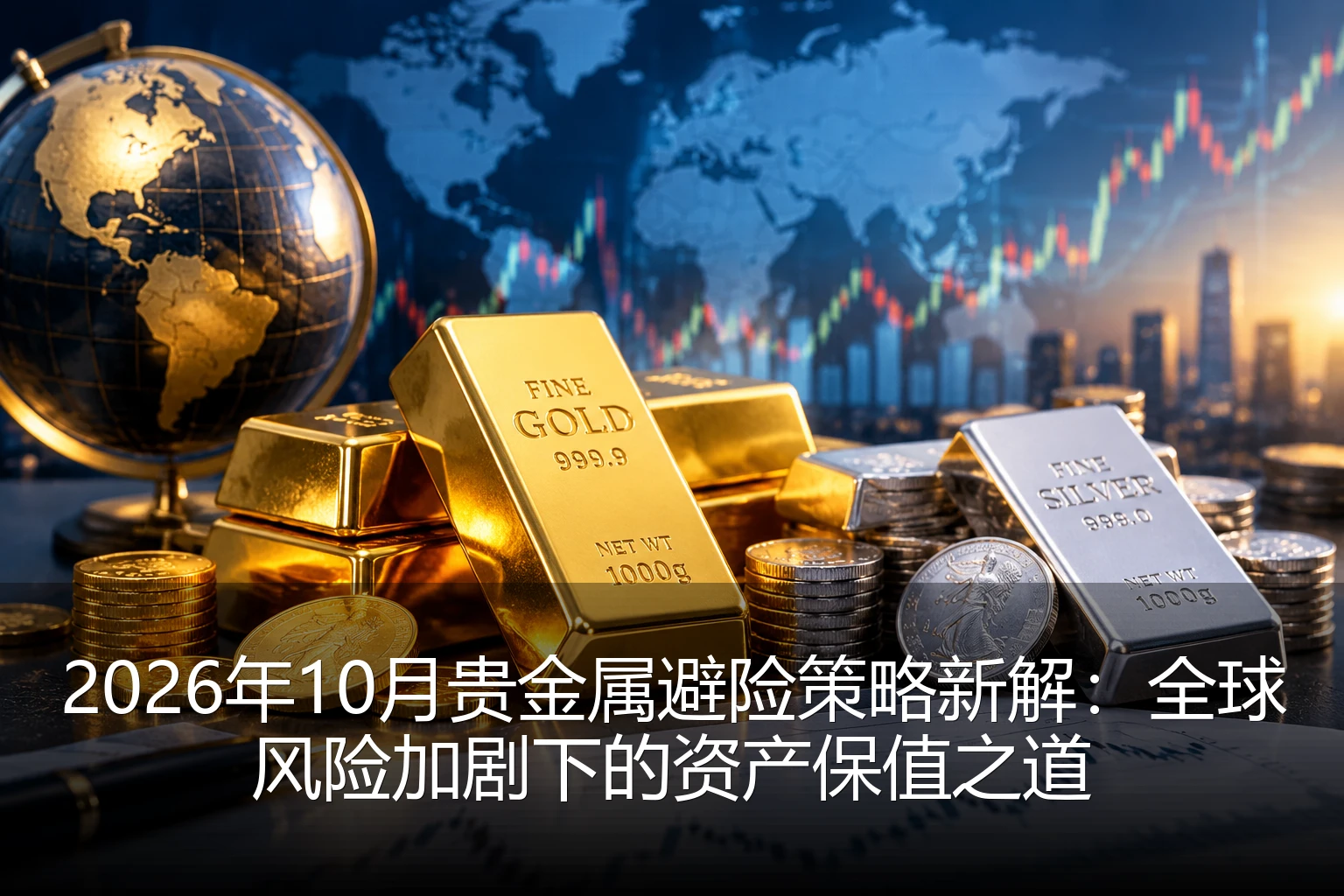
Amid intensifying global economic uncertainty, geopolitical risks, and inflationary pressures, the hedging value of precious metals is becoming prominent. This article deeply analyzes the hedging function of precious metals such as gold and silver, and explores market dynamics such as central bank gold purchases and ETF holdings changes, providing investors with a scientific strategy for hedging asset allocation.
## Increased Global Uncertainty, Growing Hedging Demand
In August 2026, the global economy is facing unprecedented uncertainty. Geopolitical conflicts continue to escalate, inflationary pressures persist in major economies, and monetary policy directions of central banks like the Federal Reserve are full of variables. Against this backdrop, precious metals, as traditional safe-haven assets, are once again becoming the focus of global investors.
According to the latest data, global gold ETF holdings have been continuously growing for several months, reaching a high point in nearly three years. Simultaneously, central banks in various countries are accelerating their gold purchases, especially central banks in emerging markets, which are actively increasing gold reserves to diversify foreign exchange reserve risks. This trend indicates that the hedging function of precious metals is being rerecognized and valued.
### Geopolitical Risks Drive Hedging Demand
The level of geopolitical tension is unprecedented. Conflicts in the Middle East continue to escalate, European energy security faces challenges, and the geopolitical landscape in the Asia-Pacific region is also changing. These factors collectively increase investor demand for traditional safe-haven assets.
Gold, as the oldest safe-haven asset, has been fully validated during periods of historical turmoil. Against the backdrop of increasing global uncertainty, the hedging function of gold is once again highlighted. Investors can effectively hedge against the risk of asset devaluation brought by geopolitical risks by holding gold.
### Demand for Preservation Under Inflationary Pressure
Although inflation rates in major global economies have receded, inflationary pressure still exists. Especially in some emerging market countries, inflation rates remain at high levels. In this situation, the preservation function of precious metals is particularly important.
Gold, as an inflation hedge tool, often performs well in inflationary environments. Historical data shows that during periods of high inflation, gold prices can usually remain stable or even rise, thereby protecting investors' purchasing power.
## In-depth Analysis of Precious Metals' Hedging Value
### Gold: The Ultimate Safe-Haven Asset
Gold, as the king among precious metals, has received broad market recognition for its hedging value. Gold possesses characteristics such as scarcity, liquidity, and high global acceptance, making it an ideal safe-haven asset.
First, the scarcity of gold determines its value basis. Global gold reserves are limited, and extraction costs are constantly rising, which provides support for gold prices.
Second, gold has very high liquidity. Gold can be easily bought and sold in any major financial center globally, and transaction costs are relatively low. This high liquidity allows gold to be quickly converted during market volatility.
Finally, gold has high global acceptance. Regardless of which country, gold is regarded as a valuable asset, giving gold a cross-regional hedging function.
### Silver: Dual Drivers of Industrial Demand and Hedging Sentiment
Silver, as another important precious metal, its hedging value should not be overlooked. Compared to gold, silver not only has a hedging function but is also supported by industrial demand. Silver has wide applications in fields such as electronics, photovoltaics, and medicine, giving it a dual nature of demand: it is influenced by risk aversion sentiment and industrial demand.
Against the backdrop of increasing global economic uncertainty, industrial demand for silver may be somewhat affected, but its hedging function will be strengthened. Investors can gain dual support from both industrial demand and risk aversion by holding silver.
## Central Bank Gold Buying Trends and Market Impact
### Central Bank Gold Buying Reaches Historic Highs Globally
In recent years, the trend of central bank gold buying has accelerated globally. According to the latest data, the volume of central bank gold purchases in the first half of 2026 reached a historic high for the same period, indicating that central banks worldwide highly recognize the hedging value of gold.
Central banks in emerging market countries are the main drivers of gold buying. By increasing gold reserves, these countries can effectively diversify foreign exchange reserve risks and reduce dependence on single currencies like the US dollar.
Central banks in developed economies are also adjusting their gold reserve strategies. Although the overall scale of purchases is relatively small, some central banks in developed economies have begun reassessing the position of gold in their reserves.
### Impact of Central Bank Gold Buying on the Market
Central bank gold buying has a significant impact on the precious metals market. First, central bank gold buying increases the market's long-term demand for gold, providing support for gold prices.
Second, central bank gold buying sends positive signals, enhancing market confidence in gold. When central banks begin to increase gold reserves, it indicates that they affirm the long-term value of gold.
Finally, central bank gold buying may affect the supply pattern of gold. As the volume of central bank gold purchases increases, the amount of gold available for trading in the market may decrease, thereby pushing up gold prices.
## ETF Holdings Changes and Market Sentiment
### Gold ETF Holdings Reach Recent Highs
As an important tool for investors to participate in the gold market, changes in Gold ETF holdings reflect changes in market sentiment. According to the latest data, the holdings of Gold ETFs have been increasing for several consecutive months, reaching a high point in the last three years.
This growth indicates that investors' demand for gold as a hedge is increasing. Especially during periods of market turmoil, inflows into Gold ETFs often precede price increases in gold.
It is noteworthy that the structure of Gold ETF holdings has also changed. The ratio between institutional investors and individual investors has been adjusted, reflecting differences in investor perceptions of the hedging value of gold.
### Silver ETF Holdings Also Increase
Similar to Gold ETFs, the holdings of Silver ETFs are also showing an increasing trend. This indicates that investors are not only focusing on the hedging function of gold but are also beginning to value the hedging value of silver.
The growth of Silver ETFs reflects the market's recognition of silver's dual nature: both as an industrial metal and as a hedging asset. This dual nature gives silver a unique investment value in the current market environment.
## Precious Metals Hedging Allocation Strategy
### Precious Metals Ratio in Asset Allocation
The proportion of precious metals in asset allocation should be determined according to the investor's risk tolerance, investment horizon, and market conditions. Generally, the proportion of precious metals in a portfolio should be between 5% and 15%. For investors with lower risk tolerance, it is appropriate to increase the proportion of precious metals to enhance portfolio stability. For investors with higher risk tolerance, it is appropriate to reduce the proportion of precious metals to pursue higher returns.
Against the backdrop of increasing global economic uncertainty, it is necessary to increase the proportion of precious metals. This can help investors hedge market risk and protect asset value.
### Investment Allocation Recommendations by Investor Type
For long-term investors, consider regular fixed-amount investments in precious metals to average costs and reduce the impact of market fluctuations. For short-term investors, focus on changes in market sentiment, buying during market panic and selling during market optimism.
For institutional investors, consider using derivative tools such as futures and options to hedge against precious metal price volatility risk. Simultaneously, consider holding physical gold to obtain a more stable hedging effect.
## Industry Outlook and Investment Advice
### Precious Metals Market Outlook
Looking ahead, the precious metals market is expected to remain active. Against the backdrop of increasing global economic uncertainty, the demand for precious metals as a safe haven will continue. Meanwhile, the trend of central bank gold buying and the growth in ETF holdings will provide support to the precious metals market.
However, investors also need to pay attention to market risks. Precious metal prices are influenced by various factors, including monetary policy, geopolitics, economic data, etc. Investors should closely monitor changes in these factors and adjust investment strategies in a timely manner.
### Investment Advice
For retail investors, it is recommended to participate in the precious metals market through instruments such as gold ETFs and silver ETFs. These instruments have advantages such as high liquidity and low trading costs, making them suitable for most investors.
For high-net-worth investors, consider holding physical gold or silver directly to obtain a more stable hedging effect. Simultaneously, consider investing in precious metals mining stocks to share in the returns from industry growth.
In summary, against the backdrop of increasing global uncertainty, allocating assets for precious metals as a hedge has become the mainstream strategy. Investors should fully recognize the hedging value of precious metals, allocate assets rationally to cope with market risks, and protect asset value.
The content of this website is for learning and communication only. It does not provide financial services such as account opening, capital allocation, discretionary management, insider trading, etc. Please do not trust any private messages on the site that recommend stocks or provide trading signals.
Previous
August 2026 Precious Metals Hedging Allocation Guide: Asset Protection Strategies Under Dual Pressures of Geopolitical Tensions and Economic Recession
NextAugust 2026 Precious Metals Hedging Strategy: Asset Preservation in a World of Global Uncertainty
Related Articles