Gold Market Turns Sharply: Global Banks Cut Forecasts as Banks Tighten Precious-Metals Trading Risk
Keywords: Gold price; Federal Reserve; global banks; precious metals investment; margin ratio; risk warning
Introduction
Recently, the gold market has seen a notable pullback. Gold, once regarded as the "ultimate safe haven," is now under dual pressure from the macro backdrop and shifting capital expectations. As international gold prices continue to weaken, several global banks including Goldman Sachs, Citi, JPMorgan Chase, Morgan Stanley, and ANZ have successively cut their gold price outlooks, cooling the market's optimism about gold's short- to medium-term trend. At the same time, many domestic banks have raised margin ratios for deferred precious-metals contracts, further signaling tighter risk controls.
Changes in gold prices are no longer just ordinary commodity-market fluctuations. Behind them lies a complex game shaped by interest-rate paths, geopolitical conditions, central bank behavior, and investors' risk appetite. In the current environment, gold has shifted from a "one-way rally" logic to a "high-volatility, range-bound" logic, which has become the market's new consensus.
1. Global banks cut forecasts in quick succession, putting clear short-term pressure on gold
In the latest round of adjustments, Goldman Sachs sharply cut its 2026 year-end gold target price to $4,900 per ounce from its previous forecast, a reduction of $500. Its core reason is that the Fed's expected rate cuts this year have largely failed to materialize, and even the timing of the next cut has been pushed back to 2027. This means one of the key funding-side drivers supporting gold's rise is weakening. Because gold itself does not yield interest, its appeal often fades when real rates remain elevated.
Not only Goldman Sachs, but Citi has twice lowered its gold price forecast within just one month, and JPMorgan Chase, Morgan Stanley, and ANZ have also followed suit. Notably, Morgan Stanley had earlier lowered its 2026 second-half target price from $5,700/oz to $5,200/oz, citing the combination of geopolitical risks and the rate environment, which has changed the macro framework that previously supported gold's rise.
The market is highly sensitive to these forecasts because gold did indeed go through a strong rally earlier. At the end of January this year, the front-month gold futures contract on the New York Mercantile Exchange once broke above $5,500 per ounce, setting a year-to-date high; now gold has fallen below the $4,200 mark, making the trend reversal very clear. For a gold market that relies heavily on expectations, once prices weaken, institutions lowering their target prices often further amplify market caution.
2. From "safe-haven asset" to "high-volatility asset," gold's logic is being reshaped
A decline in gold does not mean its long-term value has been fully denied; rather, it shows that the logic driving gold prices is shifting. Over the past period, gold benefited from geopolitical tensions, expectations of easier global liquidity, and central bank demand for bullion, keeping prices strong. But when the Fed's policy path turns more hawkish and the market reprices how long rates will stay high, the valuation basis for gold begins to come under pressure.
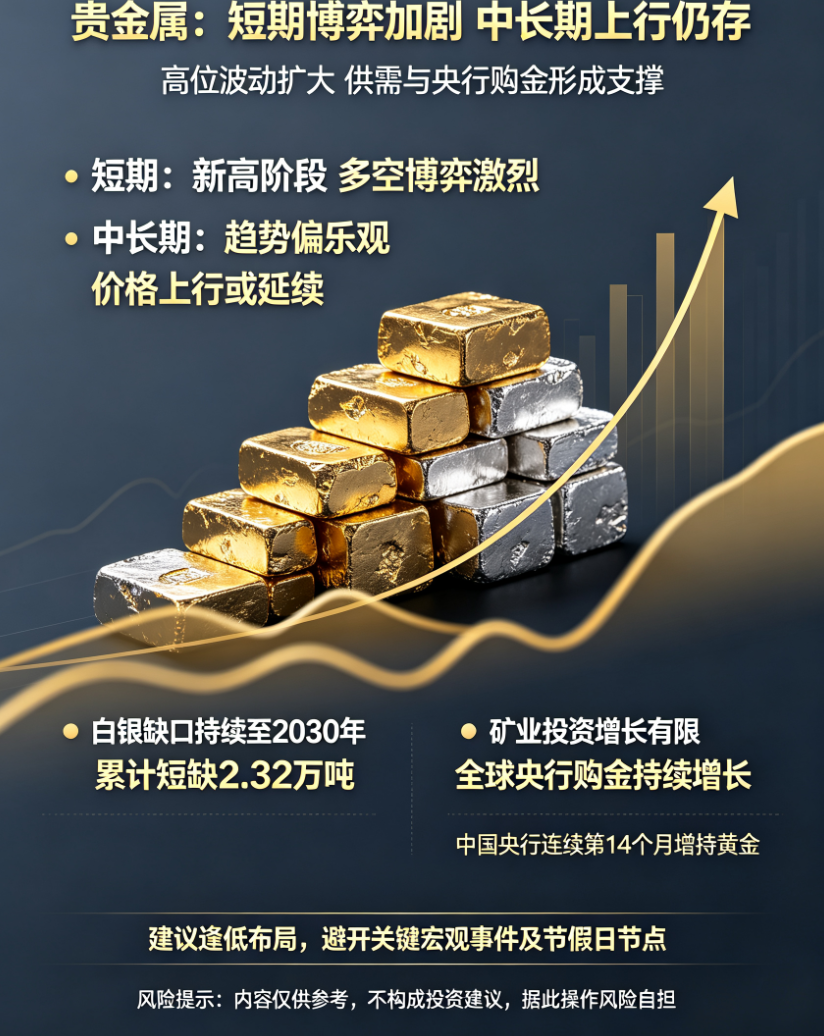
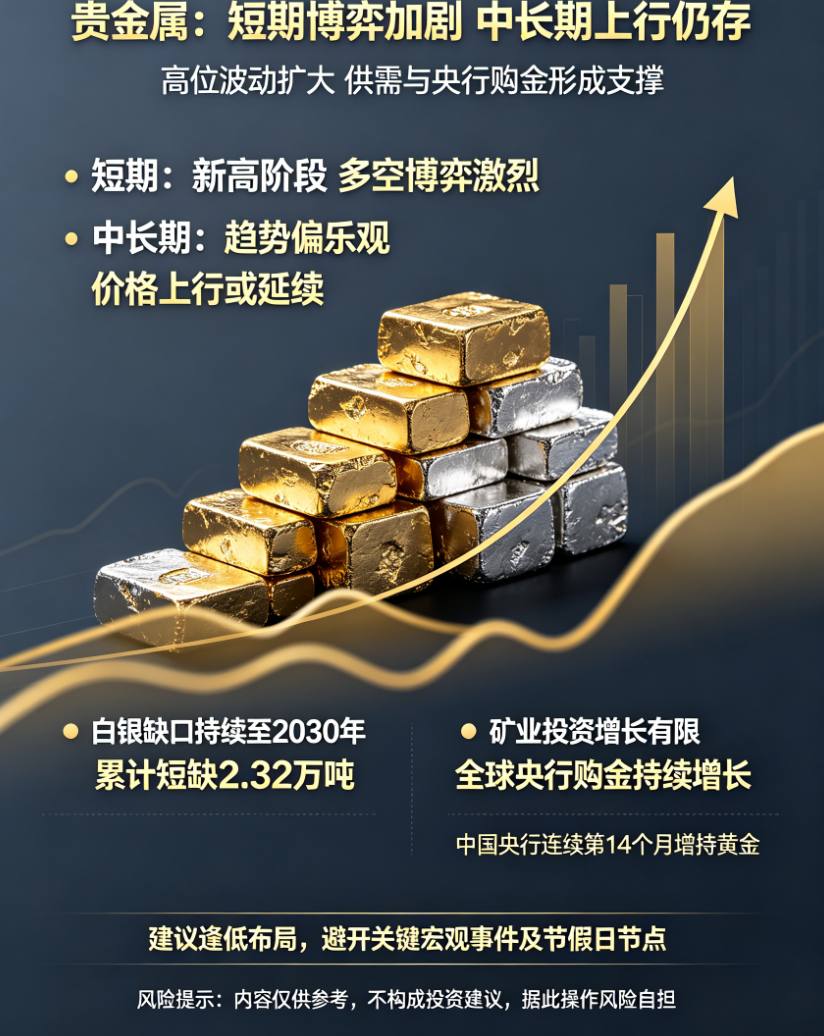
Although Goldman Sachs lowered its short-term target, it still remains structurally bullish over the medium to long term, mainly because continued gold buying by global central banks provides stable support. This is crucial. In other words, gold has not lost its long-term allocation value; it has simply moved from an "emotion-driven rally" phase back to a phase where prices are anchored by fundamentals. For investors, this means gold is more likely to exhibit wide swings ahead rather than a one-way breakout.
At the same time, a judgment from ANZ is also worth noting: the market is caught between geopolitical anxiety and inflation concerns. The former is usually positive for gold, while the latter may strengthen rate-hike expectations and suppress prices. With both forces in play, gold's short-term direction is harder to define, and capital patience and position management are tested more than ever.
3. Banks raise margin requirements in sync, and risk management clearly tightens
Against the backdrop of heightened volatility in international gold prices, domestic banks are also upgrading risk controls for precious-metals business. Banks such as Guangfa Bank, China CITIC Bank, Agricultural Bank of China, China Construction Bank, ICBC, China Merchants Bank, and Bank of China have successively raised margin ratios for deferred gold and silver contracts, while reminding investors to control positions and participate rationally.
Frequent margin hikes by banks send two signals: first, market volatility has increased significantly and trading risk is rising; second, banks want to raise the entry threshold to reduce potential losses for clients in a high-leverage environment. For ordinary investors, this is not just a change in trading rules, but an important reminder of risk appetite: the precious-metals market is entering a phase of "high volatility and high uncertainty."
From an investment perspective, higher margin requirements mean the same position size ties up more capital, leverage effects decline, and both gains and losses can be swallowed by amplified volatility. Especially during rapid price pullbacks, lack of position control can easily trigger margin calls or forced liquidation, causing unnecessary capital losses. Therefore, banks' concentrated risk warnings are essentially telling investors that gold investing has shifted from "just looking at direction" to "risk management is mandatory."
Conclusion
Overall, the current pressure on gold is not the result of a single factor, but of multiple variables acting together: changing Fed policy expectations, real rates staying elevated, global banks collectively lowering forecasts, and the weakening of the market's safe-haven logic. In the short term, gold prices may remain under pressure and range-bound, but in the long run, central bank buying and uncertainty in the global fiscal and monetary environment could still provide underlying support for gold.
For investors, the most important thing right now is not to blindly call a top or a bottom, but to reassess their own risk tolerance and avoid chasing rallies or selling into weakness during a high-volatility phase. Gold still deserves attention, but it is no longer the asset that can easily replicate a legend of endless gains. The gold market ahead may be better suited to steady allocation than aggressive speculation.