August 2026: Intensifying Global Uncertainty and New Landscape for Precious Metals Hedging Strategies
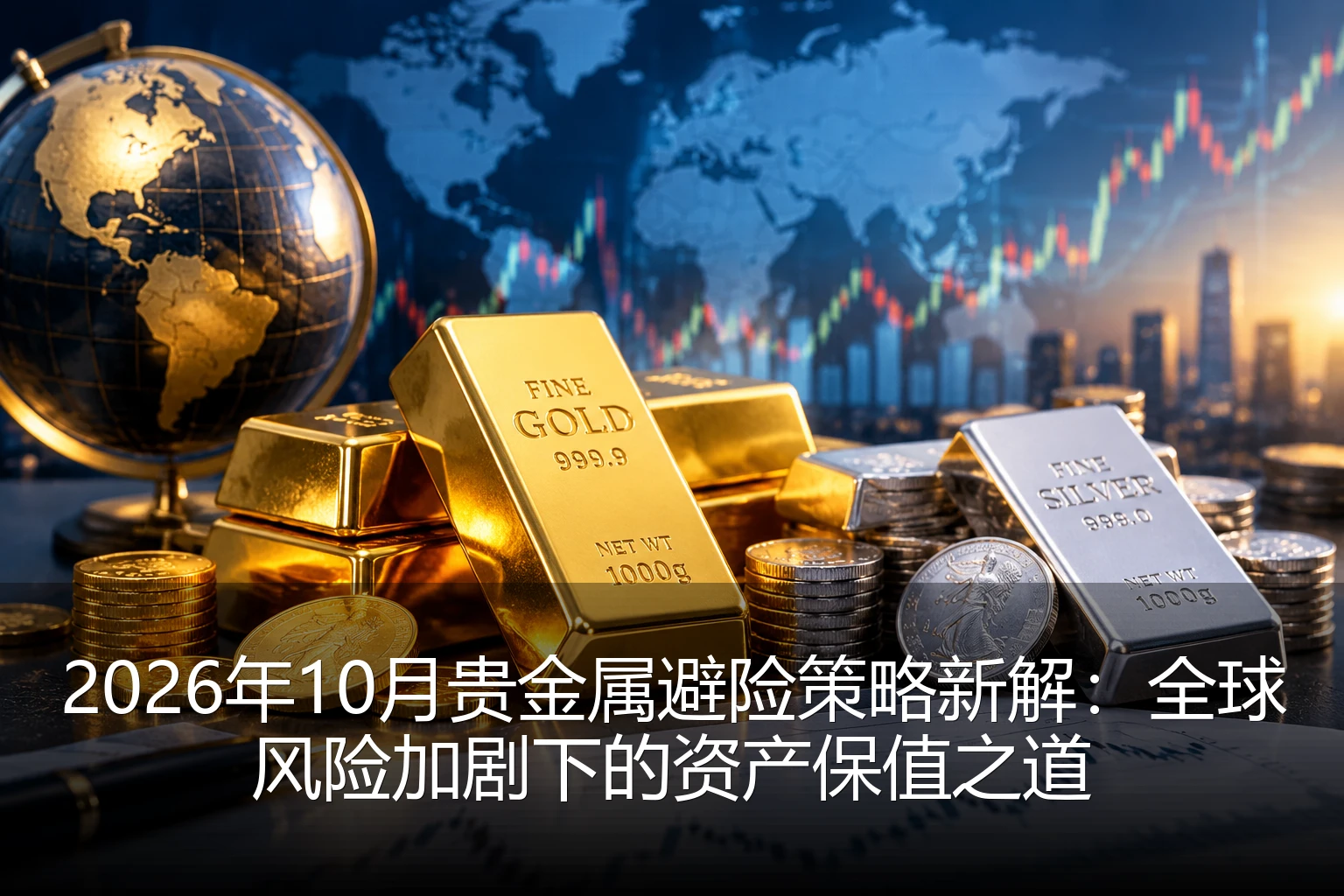
In August 2026, the global economy is in a critical period filled with uncertainty. Geopolitical tensions continue to escalate, major economies experience slowing growth, inflation pressures, although easing, still pose hidden worries, and financial market volatility is intensifying. Against this backdrop, precious metals such as gold and silver are once again highlighted as traditional safe-haven assets and become important choices in investor asset allocation. This article will deeply analyze the impact of the current global economic situation on the precious metals market, explore hedging strategies for different investors, and how to optimize precious metal allocation to cope with multiple risk challenges.
Intensifying Global Economic Uncertainty Drives Increased Demand for Precious Metals Hedging
Since 2026, the global economy faces multiple challenges. While the US economy maintains growth, momentum is weakening; the Eurozone economy is facing a technical recession; China faces structural transformation pressures; and other emerging markets face risks of currency devaluation and capital outflow. The latest report from the International Monetary Fund (IMF) shows that global economic growth expectations for 2026 have been revised downwards from the beginning of the year to 2.8%, the lowest level in nearly three years.
Meanwhile, geopolitical risks continue to flare up. Tensions in the Middle East are escalating, the long-term trend of the Russia-Ukraine conflict is evident, and tensions in the Taiwan Strait are raising market concerns. These geopolitical events not only directly impact energy and commodity markets but also raise concerns among global investors about financial stability, further increasing the demand for precious metals as a hedge.
Regarding inflation, although inflation rates in major global economies have fallen from their peaks in 2022, inflation expectations remain unstable. The timing and magnitude of monetary policy shifts by central banks like the Federal Reserve and the European Central Bank are uncertain, which increases market volatility and reaffirms the value of precious metals as an inflation hedge.
Precious Metals Market Performance Analysis: Clear Differentiation Between Gold and Silver
Since 2026, the precious metals market has shown a clear divergence in trends. Gold prices have performed strongly, with international gold prices breaking the $2700 per ounce threshold in early August, setting a new historical high. In contrast, while silver prices have also risen, the increase has been relatively moderate, and the gold-silver ratio remains in historical low territory.
The strong performance of gold prices is mainly due to three factors: first, central banks worldwide continue to accumulate gold reserves, with central banks in emerging markets accelerating their gold purchases; second, rising geopolitical risks driving hedging demand; and third, expectations of declining real interest rates reinforcing the appeal of gold as a non-yielding asset. Latest data from the World Gold Council shows that gold purchases by central banks globally increased by 15% year-on-year in the first half of 2026, maintaining a net accumulation trend for the third consecutive year.
The silver market is affected by the dual influence of industrial demand and hedging sentiment. On one hand, the acceleration of the global green energy transition is driving growing demand for silver in the photovoltaic industry; on the other hand, concerns about economic slowdown limit demand for industrial silver. This dual game makes the silver price trend relatively complex, with higher volatility than gold.
Precious Metals Hedging Strategies: Differentiated Choices for Different Investors
Facing the complex and changing market environment, investors should formulate differentiated precious metals hedging strategies based on their risk tolerance, investment horizon, and asset allocation needs.
1. Long-Term Investors: Core Allocation Strategy
For long-term investors, precious metals should be a core component of asset allocation, rather than a tool for short-term trading. It is recommended to set the gold asset allocation ratio between 5% and 10% of total assets, with the specific ratio adjustable according to individual risk preference. Long-term investors should focus on investment tools such as physical gold, gold ETFs, and gold stocks, using regular fixed-amount investment methods to smooth market volatility risk. It is worth noting that long-term investors should also pay attention to the low correlation between gold and other assets. Research indicates that the correlation between gold stocks and gold prices is about 0.6-0.7, while the correlation between gold ETFs and gold prices is close to 0.9. Therefore, long-term investors can choose different types of gold investment tools based on their needs to achieve a balance between risk diversification and return optimization.2. Mid-term Investors: Tactical Allocation Strategy
Mid-term investors (1-3 year investment horizon) can adopt more flexible tactical allocation strategies. These investors should closely monitor macroeconomic data, central bank policy trends, and geopolitical events to adjust the proportion of precious metals in asset allocation as appropriate. For example, when economic data is weak and geopolitical risks are rising, the gold allocation ratio can be appropriately increased; conversely, when economic data is strong and market risk appetite rises, gold allocation can be moderately reduced. For mid-term investors, derivative tools such as gold futures and options may provide better risk management effects. By constructing option portfolios, mid-term investors can control downside risk while retaining upside potential. For instance, buying put options on gold while holding physical gold can create a protective put strategy, effectively reducing portfolio volatility.3. Short-term Traders: Combining Technical Analysis and Market Sentiment
Short-term traders (investment horizon within 1 year) should focus more on technical analysis and changes in market sentiment. Short-term precious metal price fluctuations are influenced by various factors, including the USD exchange rate, real interest rates, and market risk appetite. Short-term traders should establish a comprehensive technical analysis system, combining key support and resistance levels to formulate clear entry and exit strategies. At the same time, short-term traders should closely monitor market sentiment indicators, such as the flow of funds into gold ETFs and speculative holder reports. These indicators can help judge extreme market sentiment to find potential turning points. For example, when gold ETFs experience large outflows while gold prices remain firm, it may indicate that the market is about to adjust.2026 Second Half Precious Metals Market Outlook and Risk Warning
Looking ahead to the second half of 2026, the precious metals market will still face multiple influencing factors. From positive factors, the trend of central bank gold buying is expected to continue, geopolitical risks still exist, and expectations of declining real interest rates may strengthen the appeal of gold. From risk factors, if the US economy performs better than expected, it may delay the Fed rate cut timing, and a reversal in the dollar weakening trend could put pressure on gold prices. Specifically regarding the gold market, gold prices are expected to fluctuate in the range of $2600-$2900 per ounce in the second half, with the possibility of breaking the $3000 threshold, but more catalysts are needed. In the silver market, with the continued development of the photovoltaic industry, industrial demand for silver is expected to remain growing, but concerns about economic slowdown may limit the upside potential for silver prices, with silver prices expected to fluctuate in the range of $38-$48 per ounce. Investors should also note the following risks when allocating precious metal assets: first is liquidity risk, especially during periods of severe market volatility; second is storage risk, as the storage and security of physical gold require additional costs; third is transaction costs, as there are significant differences in fees across different investment channels, and investors should consider them comprehensively.Conclusion: The Long-Term Value of Precious Metal Hedging
Against the backdrop of increasing global economic uncertainty, precious metals are once again recognized by the market as a traditional safe-haven asset. Whether long-term investors, medium-term investors, or short-term traders, should formulate differentiated precious metal hedging strategies based on their needs and risk tolerance. For most investors, treating precious metals as a stabilizer in the asset allocation rather than the primary source of returns is the more rational choice. By reasonably allocating precious metal assets such as gold and silver, investors can effectively hedge risks in an environment of increasing economic uncertainty and achieve asset preservation and appreciation. Looking ahead, as the global economic landscape evolves and financial markets continue to fluctuate, the hedging function of precious metals is expected to be further strengthened. Investors should closely monitor global economic trends, changes in central bank policies, and geopolitical events, and flexibly adjust their precious metal allocation strategies to cope with the constantly changing market environment. In summary, in an era full of uncertainty, precious metal hedging strategies are an indispensable part of investor asset allocation. Through scientifically rational precious metal allocation, investors can safeguard their wealth in volatile market environments and lay a solid foundation for long-term wealth growth.