August 2026 Precious Metals Hedging Allocation Guide: Asset Protection Strategies Under Dual Pressures of Geopolitical Tensions and Economic Recession
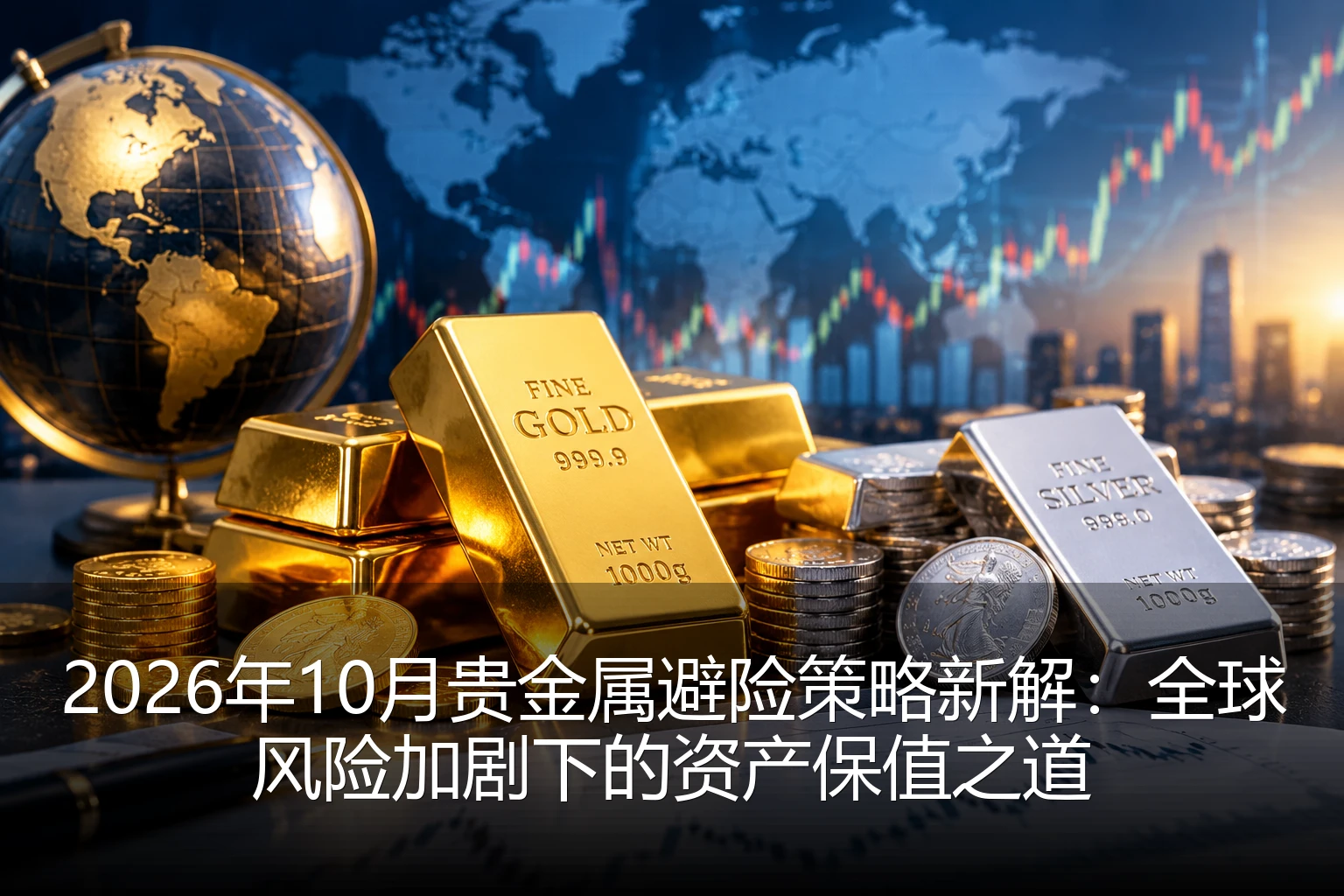
In August 2026, global financial markets are facing unprecedented uncertainty. Escalating geopolitical tensions, slowing growth in major economies, and persistent inflationary pressures are driving investors to reevaluate the value of traditional hedging assets. Precious metals, especially gold and silver, as time-honored hedging tools, have once again become the focus of investor attention. This article will provide an in-depth analysis of the hedging value of precious metals in the current market environment, explore their strategic role in asset allocation, and offer practical hedging strategy recommendations to help investors protect asset value in volatile markets.
I. Analysis of the Current Global Risk Environment
In August 2026, global markets are facing the combined impact of multiple risk factors. First, geopolitical tensions continue to escalate, with conflicts in the Middle East intensifying and tensions between Russia and NATO rising, increasing global market uncertainty. Second, growth in major economies is slowing, with many countries in the US, Europe, and Asia facing economic recession risks, which could lead to sharp fluctuations in financial markets. Additionally, inflationary pressures persist; despite central banks' adoption of tight monetary policies, supply chain issues and the Middle East situation may push up energy and food prices, further exacerbating inflationary pressures.
Against this backdrop, demand for hedging assets has increased significantly. Precious metals, especially gold, as traditional hedging tools, have once again gained market recognition for their value. According to data from the World Gold Council, global gold ETF holdings reached a historical high in the first half of 2026, with investors purchasing gold ETFs to hedge market risks.
II. Analysis of the Hedging Value of Precious Metals
1. Hedging Attributes of Gold
The core value of gold as a hedging asset lies in its independence from any national or monetary system. During market turmoil, gold typically exhibits a negative correlation with other assets, effectively hedging against inflation and currency devaluation risks. In August 2026, as the US dollar weakens and inflationary pressures rise, gold's value preservation function is once again highlighted. Moreover, gold's high liquidity and ease of trading make it the preferred hedging tool for investors during market panics.
Historical data shows that gold has performed well in past major financial crises. For example, during the 2008 global financial crisis, gold prices rose from about $700 per ounce in October 2008 to about $1,900 per ounce in 2011, a gain of over 170%. In the early stages of the 2020 COVID-19 pandemic, gold prices also hit a historical high of $2,075 per ounce. These historical experiences indicate that gold has significant hedging value during market turmoil.
2. Dual Hedging and Industrial Attributes of Silver
As a precious metal, silver also has hedging attributes, but compared to gold, its industrial demand accounts for a higher proportion, so its price fluctuations are more affected by industrial demand. In August 2026, as the global economy slows, silver's industrial demand may be somewhat impacted, but its demand in sectors like photovoltaics and electronics remains strong. Additionally, silver's higher volatility than gold means it may offer greater return potential during market turmoil, but also comes with higher risks.
Historically, silver's performance during market turmoil is somewhat similar to gold's but with greater volatility. For example, during the 2008 financial crisis, silver prices rose from about $9 per ounce in October 2008 to about $48 per ounce in 2011, a gain of over 400%, far exceeding gold's gain. However, in the early stages of the 2020 COVID-19 pandemic, silver prices rose from about $12 per ounce in March 2020 to about $30 per ounce in February 2021, a gain of about 150%, lower than gold's gain. This indicates that while silver has hedging attributes, its performance is influenced by multiple factors.
III. Current Precious Metals Market Dynamics
1. Gold Market Analysis
In August 2026, gold prices are in a high-range consolidation interval. According to the latest data, gold prices fluctuated within a range of about $2,600-$2,700 per ounce in August 2026. This price level reflects market concerns about geopolitical risks and economic recession, as well as bets on expectations of Federal Reserve interest rate cuts.
Technically, gold prices in August 2026 show certain support and resistance characteristics. There is strong support around $2,600 per ounce and resistance around $2,700 per ounce. If geopolitical risks escalate further or economic data worsens, gold prices may break through $2,700 per ounce and rise further. Conversely, if market risk sentiment eases or expectations of Federal Reserve rate hikes warm up, gold prices may pull back below $2,600 per ounce.
2. Silver Market Analysis
In August 2026, silver prices are also in a high-range consolidation interval. According to the latest data, silver prices fluctuated within a range of about $42-$45 per ounce in August 2026. This price level reflects the dual impact of market concerns about industrial demand and hedging sentiment.
Technically, silver prices in August 2026 show strong volatility. There is support around $42 per ounce and resistance around $45 per ounce. If industrial demand improves or hedging sentiment warms up, silver prices may break through $45 per ounce and rise further. Conversely, if industrial demand deteriorates or hedging sentiment cools, silver prices may pull back below $42 per ounce.
IV. Precious Metals Hedging Strategy Recommendations
1. Precious Metals Allocation Ratio in Asset Allocation
In the current market environment, investors should consider increasing the proportion of precious metals in their asset allocation. According to portfolio theory, as assets with low correlation to traditional assets (such as stocks and bonds), precious metals can effectively diversify portfolio risks. It is recommended that investors allocate 5%-10% of their assets to precious metals, with the specific ratio adjustable based on individual risk tolerance and investment objectives.
For conservative investors, consider allocating 5% of assets to gold to obtain stable hedging returns. For aggressive investors, consider allocating 10% of assets to gold and silver to pursue higher return potential. Additionally, investors may also consider allocating to precious metals ETFs or precious metals mining stocks to capture returns from precious metals price fluctuations.
2. Choosing Precious Metals Investment Methods
Investors can invest in precious metals through various methods, including physical gold, gold ETFs, gold futures, and gold mining stocks. Each method has its own advantages and disadvantages, and investors should choose the appropriate investment method based on their individual circumstances.
- Physical Gold: Physical gold includes gold bars, gold coins, etc. It has value preservation functions but comes with higher storage and transaction costs. Suitable for long-term investors, especially those who wish to hold physical assets to cope with extreme situations.
- Gold ETF: A gold ETF is an exchange-traded fund that tracks gold prices, with high liquidity and low transaction costs. Suitable for short-term and medium-term investors, especially those who want to invest in gold conveniently.
- Gold Futures: Gold futures are derivatives with leverage, which can amplify returns but also increase risks. Suitable for professional investors, especially those who want to use leverage to achieve higher returns.
- Gold Mining Stocks: Gold mining stocks are stocks of gold mining companies, whose prices are affected not only by gold prices but also by the company's operating conditions. Suitable for long-term investors, especially those who want to achieve higher returns by investing in gold mining companies.
3. Choosing Precious Metals Investment Timing
In the current market environment, investors should pay attention to the following key timings for precious metals investment:
- Escalation of Geopolitical Risks: When geopolitical risks escalate, gold prices usually rise, making it a good time to invest in gold.
- Deterioration of Economic Data: When economic data deteriorates and market concerns about economic recession intensify, gold prices usually rise, making it a good time to invest in gold.
- Warming of Expectations for Federal Reserve Rate Cuts: When expectations for Federal Reserve rate cuts warm up, the US dollar weakens, and gold prices usually rise, making it a good time to invest in gold.
- Rising Inflationary Pressures: When inflationary pressures rise, gold's value preservation function becomes prominent, making it a good time to invest in gold.
V. Future Outlook and Risk Warnings
Looking ahead, the value of precious metals as hedging assets will continue to gain market recognition. As global geopolitical tensions persist and growth in major economies slows, demand for precious metals may further increase. However, investors should also pay attention to the following risks:
- Changes in Federal Reserve Policy: Changes in the Federal Reserve's monetary policy may affect precious metals prices. If the Federal Reserve raises interest rates or maintains high rates, gold prices may come under pressure.
- Unexpected Economic Recovery: If the economic recovery exceeds expectations, market risk sentiment may improve, leading to a potential decline in demand for precious metals as hedging assets and a price pullback.
- Technological Advancements: With technological progress, substitutes for gold and silver may emerge, affecting the demand for precious metals.
In summary, in August 2026, global markets face multiple risks, and precious metals, as traditional hedging assets, have once again gained market recognition for their value. Investors should consider increasing the proportion of precious metals in their asset allocation, choosing appropriate investment methods and timings to cope with market uncertainty and protect asset value. At the same time, investors should also monitor market dynamics and adjust their investment strategies in a timely manner to address potential risks.