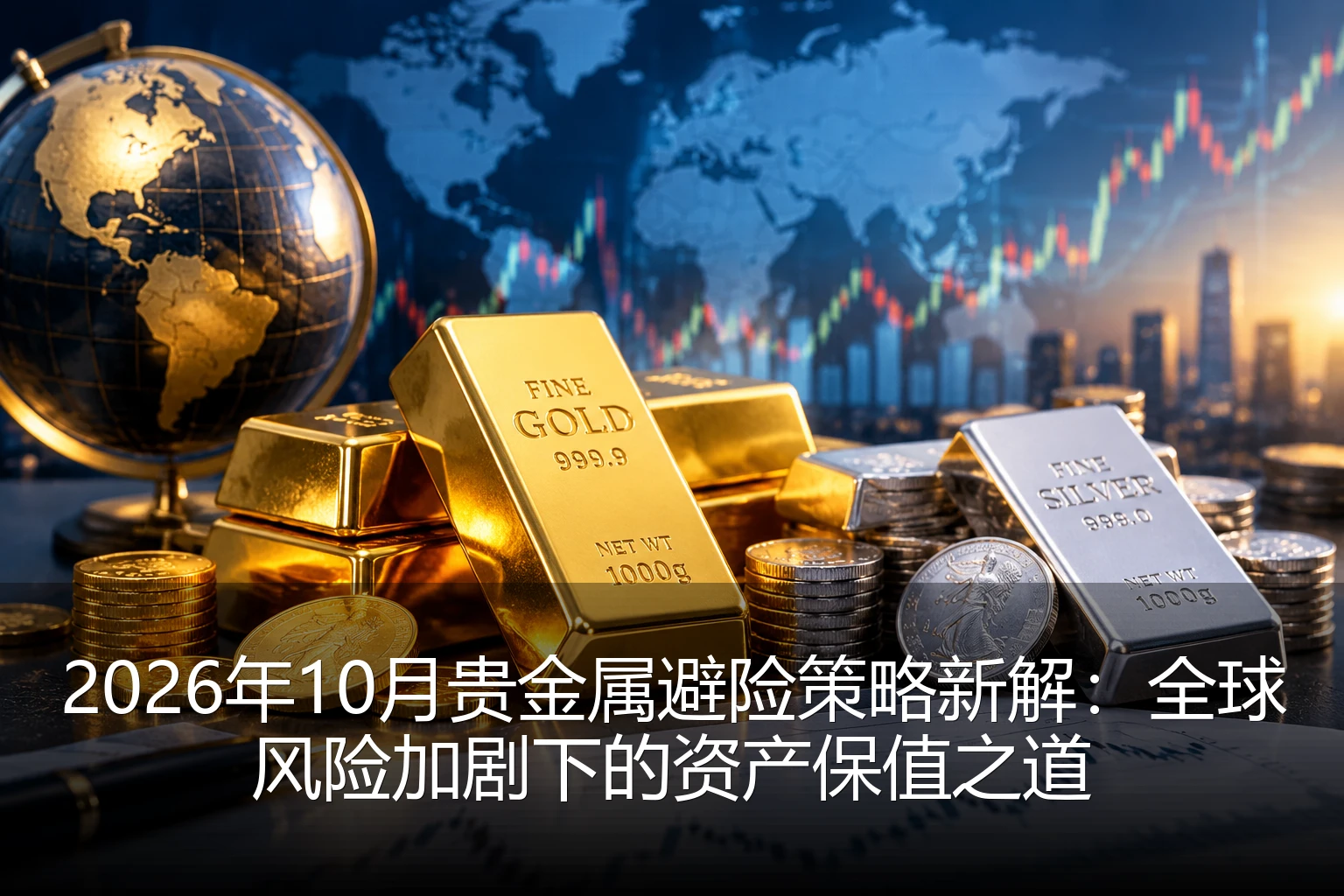
New Precious Metal Hedging Strategies in August 2026: Asset Preservation in a World of Global Uncertainty
In August 2026, a period of significant challenges, global financial markets are facing unprecedented uncertainty. From the Fed’s policy shifts to geopolitical tensions, from inflationary pressures to recession fears, investors are seeking safe havens to protect their assets. Against this backdrop, precious metals, especially gold and silver, have once again become the focus of investor attention. This article will analyze precious metal hedging strategies in the current market environment, explore the value of gold and silver as hedging assets, and provide specific investment advice.
Current Market Environment: Overlapping Uncertainties
In August 2026, global markets face the combined impact of multiple uncertainty factors. First, the Fed’s monetary policy direction has become a market focal point. Although the Fed held steady at its July meeting, markets widely expect a rate-cutting cycle to begin in September. This policy uncertainty has brought market volatility while also providing upward momentum for precious metals.
Second, geopolitical risks continue to escalate. Tensions in the Middle East, energy security concerns in Europe, and intensifying global trade frictions have all increased market uncertainty. In these circumstances, gold, as a traditional hedging asset, has seen a significant rise in demand.
Additionally, while inflationary pressures have eased, they remain above central bank targets. This inflationary environment has once again highlighted the value-preserving function of precious metals. Meanwhile, global debt levels continue to climb, reaching a record $340 trillion, further underscoring the value of precious metals as hedging assets.
Gold: Revaluation of a Traditional Hedging Asset
As the oldest hedging asset, gold has once again proven its irreplaceable value in the current market environment. In August 2026, gold prices broke through the $4300 mark, hitting a seven-week high and showing strong upward momentum. This trend is mainly driven by the following factors:
- Central Bank Gold Buying Surge: Global central banks have increased gold holdings for 21 consecutive months, with Q2 gold purchases reaching a historic high. Emerging markets have become the main hedging force, showing long-term confidence in gold.
- ETF Holdings Growth: Gold ETF holdings hit a three-month high, with institutional investors betting on accelerated Fed rate cuts in September, further boosting gold demand.
- Dollar Credit Concerns: The dollar’s credit has received rare warnings from rating agencies, with global capital flowing into gold for hedging, setting a weekly record.
Technically, gold prices have broken through key resistance levels, with strong bullish technical signals. Analysts generally believe that gold’s long-term allocation value is becoming prominent, especially as global central banks accelerate foreign exchange reserve diversification, with gold’s share reaching a near 30-year high.
Silver: The Dual Game of Industrial Demand and Hedging Sentiment
Compared to gold, silver’s performance is equally remarkable. In August 2026, silver prices broke through $45, hitting a historic high and showing strong upward momentum. Silver’s rise is mainly driven by the dual forces of industrial demand and hedging sentiment:
- Surge in Industrial Demand: Industrial demand for silver in sectors like photovoltaics and electronics continues to grow, especially with the accelerated global green energy transition, promising a positive outlook for silver’s industrial demand.
- Rising Hedging Sentiment: Like gold, silver also benefits from geopolitical risks and inflationary pressures, becoming one of investors’ hedging choices.
- Gold-Silver Ratio Changes: The gold-silver ratio fell below 55, a historic low, indicating that silver is performing more strongly relative to gold, and the precious metal investment landscape is changing.
Notably, silver’s volatility is usually higher than gold’s, which means it may offer higher returns during market turbulence but also comes with higher risks. Investors need to determine the proportion of silver in their portfolios based on their risk tolerance.
Precious Metal Hedging Strategies: How to Allocate Your Assets
In the current market environment, a reasonable precious metal allocation strategy is crucial for investors. Here are some specific recommendations:
1. Gold Allocation Strategy
- Long-term Allocation: Given that global uncertainty will persist, the value of gold as a long-term hedging asset cannot be ignored. It is recommended that investors allocate 5-10% of their assets to gold to hedge market risks.
- Timing Selection: When expectations of Fed rate cuts rise and geopolitical risks intensify, it is a good time to increase gold allocation.
- Investment Methods: Investors can participate in the gold market through various means such as physical gold, gold ETFs, and gold futures, choosing the appropriate method based on their investment preferences and risk tolerance.
2. Silver Allocation Strategy
- Focus on Industrial Demand: Investors should closely monitor changes in silver’s industrial demand, especially trends in the photovoltaic and electronics industries.
- Risk Control: Due to silver’s high volatility, it is recommended that investors control their positions and avoid over-concentration in investments.
- Diversified Allocation: Silver can be used as a supplement to gold, with a moderate increase in its proportion in the portfolio to achieve higher potential returns.
3. Precious Metal ETF Investment
Precious metal ETFs are a convenient way for investors to participate in the precious metals market. In August 2026, gold ETF holdings hit a three-month high, showing institutional investors’ confidence in precious metals. Investors can indirectly invest in gold and silver by purchasing precious metal ETFs, enjoying professional management and liquidity advantages.
Future Outlook: Opportunities and Challenges in the Precious Metals Market
Looking ahead, the precious metals market faces a situation of both opportunities and challenges. On one hand, global uncertainty will continue to support precious metals, especially with the Fed’s rate-cutting cycle starting and geopolitical risks intensifying. On the other hand, signs of economic recovery, central bank policy changes, and market sentiment fluctuations may all affect precious metal prices.
In the long run, the value of precious metals, especially gold, as hedging assets will be further confirmed. Factors such as global central bank foreign exchange reserve diversification, dollar credit concerns, and inflationary pressures will all support precious metal prices. At the same time, the growth in silver’s industrial demand also provides long-term support for the silver market.
However, investors also need to be aware of market risks. Precious metal prices are highly volatile, and short-term trading may involve higher risks. Additionally, changes in market sentiment, policy adjustments, and economic data can all have a significant impact on precious metal prices.
Conclusion: Finding Certainty in Uncertainty
In August 2026, a period of great uncertainty, precious metals, especially gold and silver, have once again proven their value as hedging assets. With reasonable allocation strategies, investors can protect asset value in volatile markets and even achieve substantial returns.
Both long-term investors and short-term traders should closely monitor the dynamics of the precious metals market and adjust their investment strategies according to market changes. Finding certainty in uncertainty is precisely the charm of precious metal investment.
As global markets continue to evolve, the status of precious metals as hedging assets will become more prominent. Investors should fully leverage this opportunity, safeguarding their assets in uncertainty and achieving wealth preservation and appreciation through reasonable allocation and timing choices.