2026 Precious Metal Hedging Strategy Analysis: Asset Preservation in a Global Uncertainty
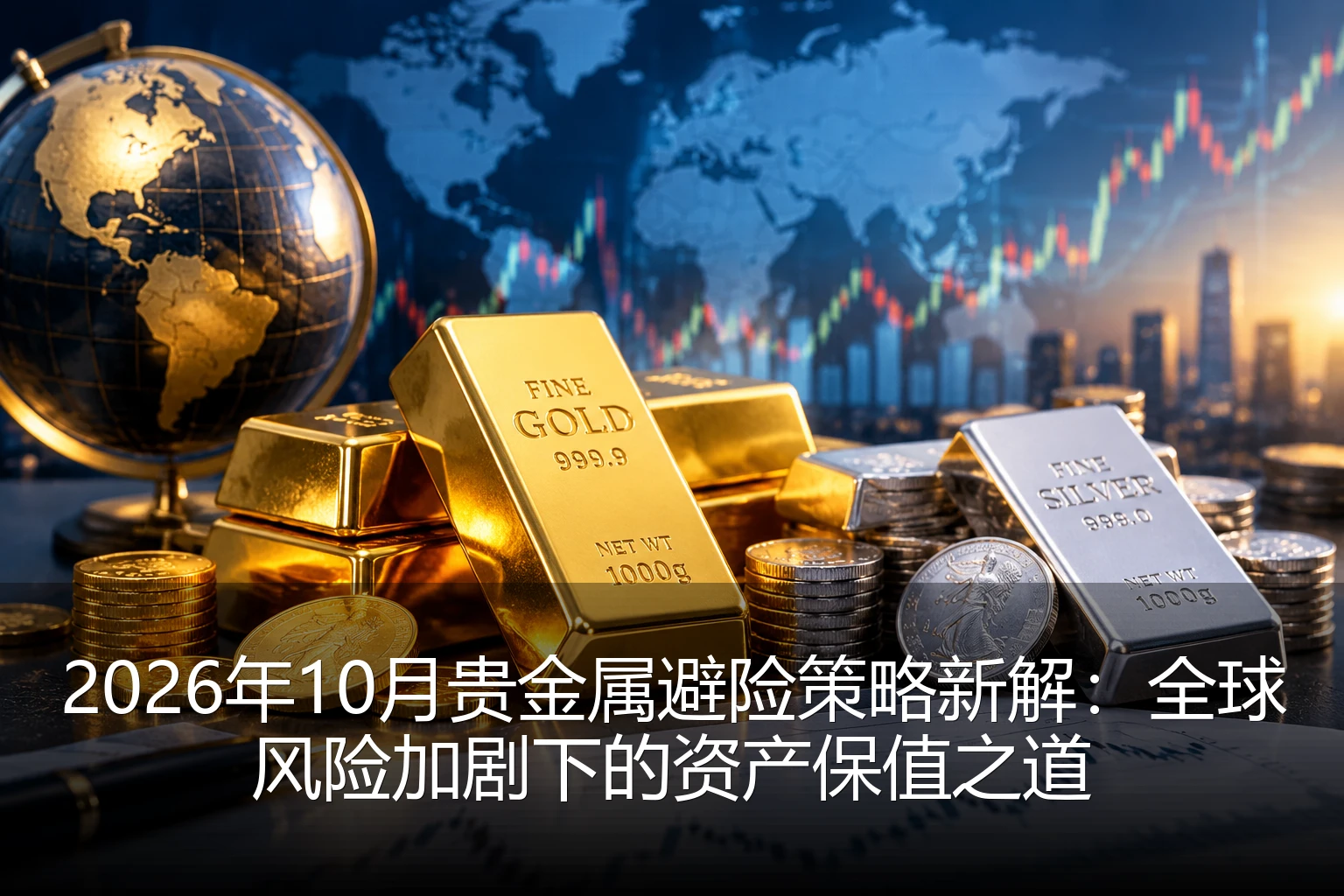
In 2026, as the global economic landscape undergoes profound changes and geopolitical risks continue to escalate, investors face unprecedented market uncertainty. From sovereign debt crises to inflationary pressures, from trade frictions to regional conflicts, multiple risk factors intertwine, making asset preservation the core issue of greatest concern to investors. Against this backdrop, the value of precious metals as traditional safe-haven assets is once again highlighted. Gold, silver and other precious metals, with their unique attributes, have become important choices for investors to build asset safety nets. This article will provide an in-depth analysis of the driving factors behind current precious metal market hedging demand, systematically introduce allocation methods for precious metal hedging strategies, helping investors achieve asset preservation and appreciation in volatile markets.
Increasing Global Economic Uncertainty, Rising Hedging Demand
The global economy in 2026 presents a complex and volatile situation. Major economies are experiencing slower growth, inflationary pressures have eased but remain above central bank targets, and monetary policies among central banks are significantly divergent. Meanwhile, global debt levels continue to rise, geopolitical conflicts occur frequently, and trade protectionism is on the rise, collectively constituting the current complex economic environment. According to data from the Institute of International Finance, global debt exceeded $350 trillion in 2026, a historic high, with increasing concerns about sovereign credit risks.
In this context, demand for traditional safe-haven assets has significantly increased among investors. Gold, as a time-honored hedging tool, is particularly favored during market turmoil due to its unique value storage properties and performance with negatively correlated assets. The latest World Gold Council report shows that global gold ETF holdings grew by 12% year-on-year in the first half of 2026, reaching a five-year high, reflecting continued institutional recognition of gold's hedging function.
Core Advantages of Precious Metals as Safe-Haven Assets
Precious metals stand out among many asset categories to become the preferred safe-haven choice, mainly due to their unique advantages:
- Value Storage Function: Precious metals have scarcity and intrinsic value, maintaining purchasing power in long-term inflationary environments and serving as effective tools against currency devaluation.
- Negative Correlation: Precious metals typically show negative or low correlation with traditional financial markets, often performing well during economic downturns or financial crises, effectively hedging portfolio risks.
- High Global Recognition: Gold as a global payment method and value storage tool has extremely high liquidity and international recognition, allowing for rapid liquidation during crises.
- Political Neutrality: Precious metals are not affected by the political and economic policies of a single country, making them politically neutral assets recognized by global investors, particularly valuable during periods of geopolitical tension.
Besides gold, silver, with its dual industrial and financial attributes, also plays an important role in hedging strategies. Silver has higher price volatility than gold, providing both hedging protection and higher return potential, suitable for investors with higher risk tolerance.
Detailed Analysis of Precious Metal Hedging Strategies
Building effective precious metal hedging strategies requires comprehensive consideration of market environment, risk tolerance, investment horizon, and other factors. Here are several mainstream precious metal hedging strategies:
1. Strategic Allocation Strategy
Strategic allocation refers to including precious metals as a long-term component of the investment portfolio, holding them continuously at a certain proportion (typically 5%-10%). This strategy does not attempt to profit from market timing but utilizes the low correlation between precious metals and traditional assets to optimize the overall risk-return characteristics of the portfolio.
Implementation points: Determine the reasonable proportion of precious metals in the investment portfolio based on personal risk preferences and market environment; adopt a regular rebalancing strategy to maintain precious metal proportions stable; choose low-cost, highly liquid investment tools such as gold ETFs, physical gold, or precious metal futures.
2. Tactical Adjustment Strategy
The tactical adjustment strategy involves making short-term adjustments to precious metal allocation proportions based on strategic allocation and changing market conditions. When market risks rise or economic prospects deteriorate, increase precious metal allocation; when market sentiment improves or economic data improves, appropriately reduce precious metal allocation.
Implementation points: Establish clear market risk assessment indicators such as volatility index, credit spread, geopolitical risk index, etc.; set clear thresholds for adding or reducing positions to avoid emotional decisions; pay attention to key signals such as central bank policy changes, inflation data, geopolitical events, etc.
3. Hedging Strategy
Hedging strategy refers to using precious metal price fluctuations to hedge specific risks. For example, when investors are concerned about stock market declines, they can buy gold futures or options as hedging tools; when concerned about rising inflation, they can increase allocations to physical gold or inflation-linked bonds (such as TIPS).
Implementation points: Clearly identify the specific types of risks that need hedging; choose appropriate hedging tools and proportions; consider hedging costs such as option premiums, futures margins, etc.; regularly evaluate hedging effectiveness and adjust strategies in a timely manner.
4. Diversified Safe-Haven Portfolio
A single precious metal variety is difficult to meet all hedging needs. Building a diversified precious metal safe-haven portfolio can provide more comprehensive risk protection. Gold, silver, platinum, and palladium each have unique characteristics that can complement each other.
Implementation points: Allocate reasonably based on the characteristics of different precious metals, such as gold as the main component, silver as supplementary, platinum and palladium as supplements; consider price correlations between varieties to avoid over-concentration; pay attention to changes in supply and demand fundamentals of different precious metals, such as industrial demand for silver, automotive catalyst demand for platinum, etc.
Adjusting Hedging Strategies in Different Market Environments
Precious metal hedging strategies are not static and need flexible adjustment according to different market environments:
Economic Recession Period
During economic recessions, stock markets typically perform weakly, bond yields decline, and central banks may adopt loose monetary policies. At this time, the value of gold as a safe-haven asset is most prominent, and allocation should be increased. Meanwhile, economic recessions are often accompanied by deflationary risks, industrial demand for silver may decline, and silver allocation should be appropriately reduced.
High Inflation Period
In a high inflation environment, the value preservation function of precious metals is particularly important. Gold, as a traditional anti-inflation tool, should be the core allocation; silver, with both financial and industrial attributes, typically performs well in inflationary environments and can be moderately increased. Additionally, inflation-linked precious metal investment products such as inflation-linked bonds (like TIPS) can be considered.
Geopolitical Tension Period
During periods of geopolitical tension, safe-haven sentiment intensifies sharply, and gold often experiences significant increases. At this time, gold allocation should be increased, especially physical gold or highly liquid gold ETFs. Meanwhile, geopolitical conflicts may affect the supply chains of certain precious metals, such as platinum and palladium mainly produced in Russia and South Africa. Geopolitical tensions in these regions may cause supply disruptions and push up prices, and investment opportunities in these varieties can be appropriately noted.
Currency Depreciation Period
When major currencies face depreciation pressure, commodities priced in those currencies often rise. Gold, as a global asset, is not affected by the depreciation of a single currency and is an ideal currency hedging tool. At this time, gold allocation should be increased, especially gold ETFs or gold stocks, to hedge against currency depreciation risks.
Case Studies of Precious Metal Hedging Strategies in Practice
In the first half of 2026, major global economies experienced slower growth, inflationary pressures eased but remained above central bank targets, geopolitical tensions continued, and market sentiment was highly risk-averse. Against this backdrop, a high-net-worth investor successfully achieved asset preservation by building a diversified precious metal safe-haven portfolio.
The investor allocated 8% of total assets to precious metals, with 5% in gold ETFs, 2% in physical gold, and 1% in silver ETFs. During the market turmoil in March, the portfolio outperformed the overall investment portfolio, with gold ETFs rising 7% in one month, effectively hedging against stock market declines. Subsequently, as inflation data came in below expectations, the investor increased the silver ETF allocation from 1% to 2%, capturing price appreciation opportunities from the recovery of silver's industrial demand.
This case shows that reasonable precious metal hedging strategies can not only provide protection during market turmoil but also capture excess returns in specific market environments. The key is to flexibly adjust strategies according to market environment changes and maintain a long-term investment perspective.
Future Outlook for Precious Metal Hedging Trends
Looking ahead, precious metal hedging strategies will face new opportunities and challenges:
Continuation of Central Bank Gold Purchases
The trend of global central banks, especially emerging market central banks, continuing to increase gold reserves is expected to continue. According to World Gold Council data, global central bank gold purchases grew by 15% year-on-year in the first half of 2026, a historic high. This trend will provide solid support for gold prices and enhance its attractiveness as a safe-haven asset.
Interaction Between Digital Currencies and Precious Metals
With the development of digital currencies, the relationship between precious metals and digital assets will become a focus of investor attention. On one hand, digital assets may divert some hedging funds; on the other hand, the high volatility of digital assets may strengthen the hedging position of precious metals. In the future, investors may need to consider both traditional precious metals and digital assets in their allocations, building more comprehensive safe-haven portfolios.
Impact of ESG Factors on Precious Metal Investments
The impact of environmental, social, and governance (ESG) factors on precious metal investments is increasingly significant. Responsible mining practices, environmentally friendly smelting technologies, supply chain transparency, etc., are becoming important dimensions for investors to evaluate the value of precious metal investments. In the future, precious metal products that meet ESG standards may receive more favor from institutional investors and become important components of hedging strategies.
Impact of Technological Innovation on the Precious Metal Market
The application of blockchain technology in precious metal trading will increase market transparency and efficiency; innovation in precious metal derivatives will provide more hedging tools; advances in precious metal recycling technology may change the supply and demand landscape. These technological innovations will bring new possibilities and challenges to precious metal hedging strategies.
Conclusion
In the uncertain 2026, the value of precious metals as safe-haven assets is increasingly prominent. By building scientific precious metal hedging strategies, investors can effectively protect asset value in volatile markets and achieve long-term preservation and appreciation. Whether strategic allocation, tactical adjustments, hedging strategies, or diversified portfolios, all require investors to flexibly adjust according to their own circumstances and market environment changes.
In the future, as the global economic landscape evolves, geopolitical risks change, and technological innovation accelerates, precious metal hedging strategies will continue to evolve. Investors need to maintain an open mindset, continuously learn, and constantly optimize their hedging strategies to remain invincible in complex and changing market environments. Precious metals are not only investment tools but also important barriers for protecting wealth and应对不确定性. In today's world facing multiple economic challenges, their strategic value cannot be ignored.