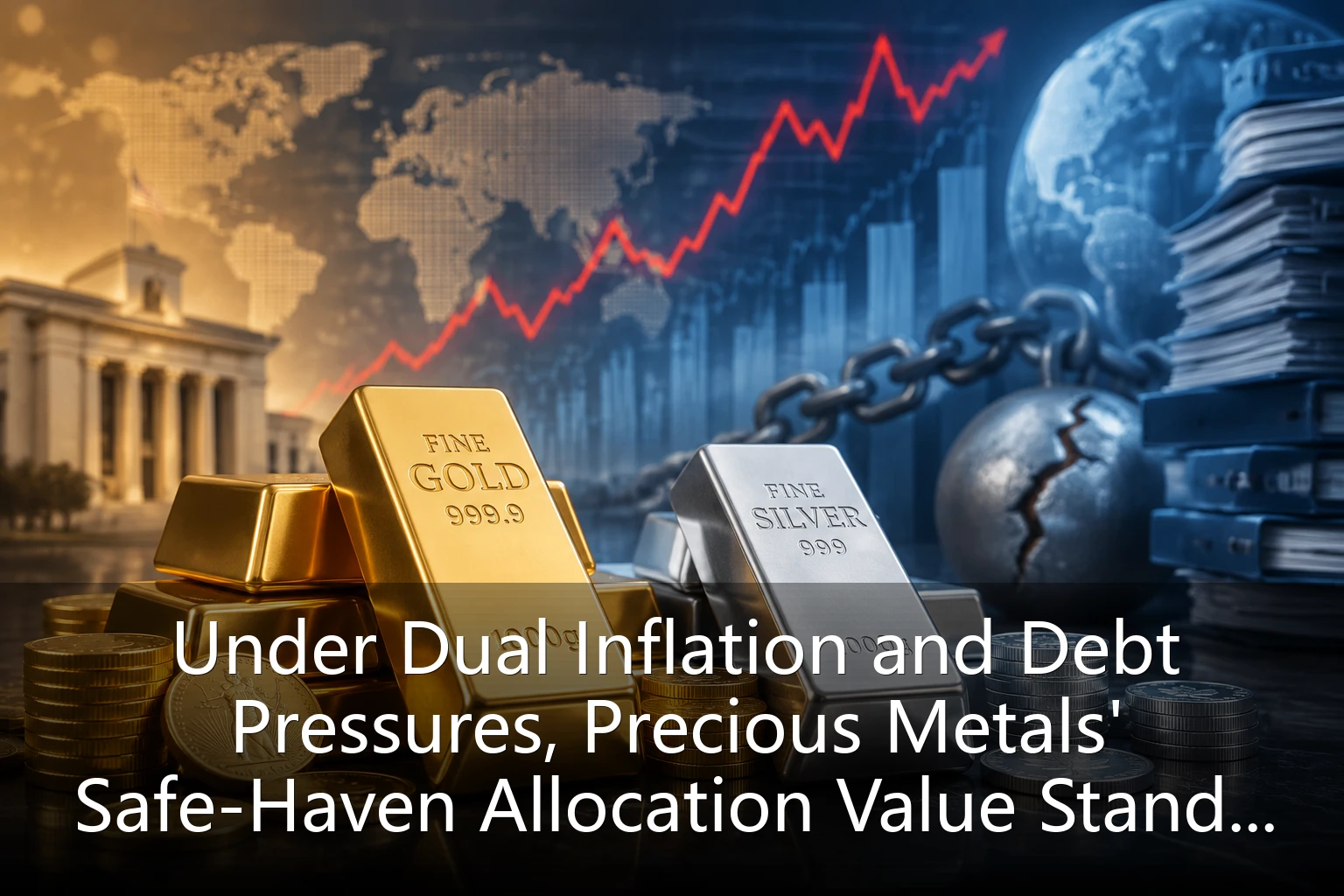
On August 1, 2026, global financial markets once again witnessed a wave of safe-haven demand. Against a backdrop of repeated inflation data fluctuations in major economies, persistently rising fiscal deficits, and heightened geopolitical uncertainty, precious metals are regaining significant attention from global investors as traditional safe-haven assets. After a period of volatility and consolidation, gold and silver prices have strengthened again recently, with capital continuing to flow into precious metals ETFs and physical investment products. Industry insiders believe that the current macroeconomic environment provides solid support for precious metals, and their value as a safe-haven allocation is being reassessed by the market.
Market Review: Why Is Safe-Haven Demand Heating Up?
In the second half of 2026, the global macroeconomy presents a complex picture of “high debt, high inflation, and low growth.” The U.S. federal government debt has surpassed the $40 trillion mark, while debt ceiling issues repeatedly unsettle market sentiment; the eurozone, hit by energy price fluctuations, has seen inflation rebound above 3%; and emerging markets face capital outflows and currency depreciation pressures. At the same time, monetary policy divergence among major central banks has widened. The Fed wavers between maintaining high rates and pivoting to easing, and changes in real interest rates provide a sensitive and direct driver for precious metals prices.
According to the latest report from the World Gold Council, global gold ETFs saw net inflows for the third consecutive month in Q2, absorbing approximately $12 billion in total, with Europe and Asia contributing most of the growth. Institutional investors' willingness to allocate to gold has strengthened markedly, reflecting deepening market concerns over fiat currency depreciation and systemic risks.
Gold: Its Position as a Core Safe-Haven Asset Remains Solid
As the most representative safe-haven asset, gold is demonstrating strong value-preservation capabilities in the current environment. Historical data show that during periods of high inflation and debt expansion, gold tends to outperform most major assets. Since 2026, international gold prices have fluctuated widely in the $2,400–$2,600 per ounce range, yet the overall center of gravity has trended upward.
From a fundamental perspective, although central banks have slowed their gold purchases, they continue to add holdings, and there is huge room for emerging-market central banks to raise the share of gold in their reserves. Meanwhile, investment demand for physical gold bars and coins remains strong, with high-net-worth individuals and retail investors in the Asia-Pacific region in particular viewing gold as an indispensable allocation tool for hedging uncertainty.
The Fed's latest policy meeting signaled that “further rate hikes cannot be ruled out,” but the market generally believes a policy shift is only a matter of time. Once real interest rates enter a downward channel, the cost of holding gold will fall significantly, potentially pushing gold prices past previous resistance levels and opening new upside headroom.
Silver: Industrial and Safe-Haven Attributes in Tandem
Silver not only has safe-haven appeal but also broad industrial applications. In 2026, the global green energy transition is accelerating, driving continued growth in solar industry demand for silver, while emerging sectors such as 5G and electric vehicles also add incremental demand. According to the Silver Institute's forecast, global silver demand will reach 1.15 billion ounces this year, while mine supply will only provide about 850 million ounces, marking the fourth consecutive year of a widening supply-demand gap.
This supply-demand structure gives silver greater price elasticity in risk-off rallies. Silver prices have recently followed gold upward, but the gold/silver ratio remains above its historical average, suggesting silver is relatively undervalued. Should risk appetite recover, silver has catch-up potential driven by supply tightness, and deserves close attention from investors.
However, investors should be reminded that silver's price volatility is far higher than gold's, with frequent short-term speculative inflows and outflows. In a safe-haven allocation, silver is suitable as a supplement to gold, but position management and risk control are especially important.
How Should Investors Position for Precious Metals Hedging?
Facing a complex and volatile market environment, investors need to formulate a sensible precious metals investment strategy based on their own risk appetite and capital size. The following are several mainstream allocation methods:
- Physical gold and silver: Suitable for long-term value preservation and serving as a “ballast” in household asset allocation. Physical gold bars and silver coins are easy to hold, but storage and liquidation costs must be considered.
- Gold ETFs and silver ETFs: Low barriers and good liquidity make them suitable for ordinary investors to trade in the secondary market. ETFs conveniently track precious metals prices without the need to worry about physical custody.
- Futures and options: Suitable for professional investors to hedge or use leverage. Futures contracts can lock in price risk, but margin requirements can amplify losses, so strict position control is required.
- Precious metals mining stocks: Investing in gold and silver producers allows investors to enjoy earnings leverage, but these stocks are affected by business risks and management decisions and do not move perfectly in tandem with metal prices.
For conservative investors, it is recommended to keep the precious metals allocation at 10%–15% of total assets, with gold as the core and silver as a complement. For aggressive investors, the proportion of silver and related ETFs can be moderately increased, but strict stop-loss discipline must be maintained.
Risk Warnings and Outlook
Although the safe-haven logic for precious metals is clear, markets are always full of uncertainty. If major central banks unexpectedly hike rates aggressively, or geopolitical tensions see a substantial de-escalation, precious metals prices could face pullback pressure. In addition, periodic dollar strength would also weigh on dollar-denominated precious metals.
Looking ahead to the second half of 2026, the global political and economic landscape remains complex. Policy volatility from the U.S. midterm elections, evolving geopolitical frictions in the Asia-Pacific region, and sovereign debt sustainability risks could all act as triggers for risk-off sentiment. Industry professionals generally believe that the safe-haven attributes of precious metals will continue to deliver value in the coming years, and long-term allocation demand is expected to grow steadily.
At the current juncture, investors may adopt “defense” as the core approach, building positions in batches and accumulating on dips, and through a sensible mix of gold and silver, construct an asset line of defense against uncertainty.