Rare Rebuke from Rating Agency Shakes the Foundation of Dollar Credit
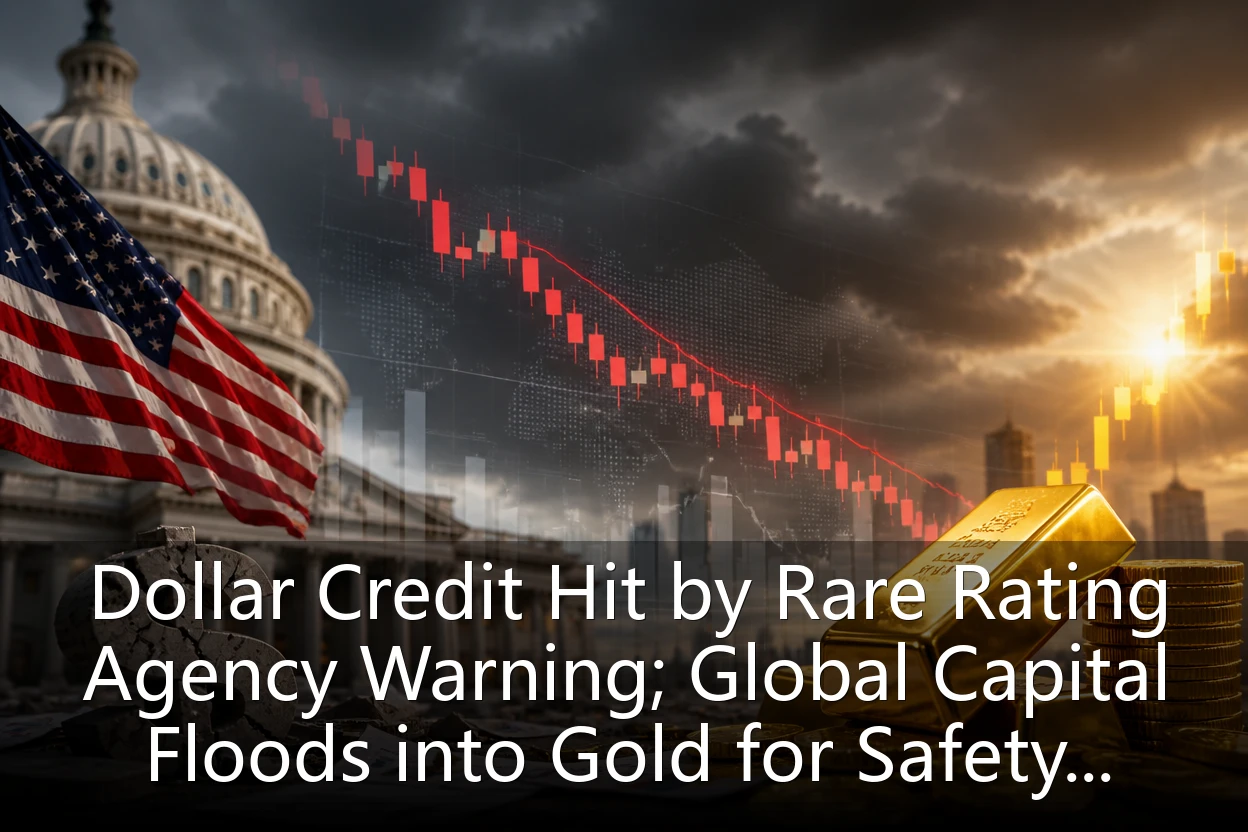
On the first trading day of August 2026, global financial markets were hit by violent turbulence triggered by U.S. fiscal credit. International authoritative credit rating agency Moody's, in a rare move after market close on July 31 local time, downgraded the outlook for the U.S. Treasury rating from "stable" to "negative." The direct trigger points to the Congressional deadlock over the fiscal year 2027 budget and spiraling debt interest costs. Although Moody's has not yet formally downgraded the U.S.'s top-tier AAA rating, this "negative" outlook implies a substantial risk of a sovereign credit rating downgrade within the next 12 to 18 months. Upon the news breaking, risk-aversion sentiment in capital markets instantly ignited.
Dollar Battered as Gold Price Breaks Key Resistance
Hit by the outlook downgrade, market confidence in U.S. Treasury bonds showed cracks. In early Asian trading on August 1, the U.S. Dollar Index (DXY) plunged below the 100 integer mark, hitting a near 18-month low. In stark contrast, gold, the ultimate safe-haven asset, surged powerfully. As of press time on August 2, the international spot gold price had forcefully broken above $2,580 per ounce, with a cumulative weekly gain exceeding 4%, marking the largest weekly surge since the banking turmoil this past March. Silver followed closely, reclaiming a position above $41 per ounce, with the gold-silver ratio briefly converging to around 85, signaling a full-scale return of precious metals' safe-haven attributes.
Safe-Haven Logic Reshaped: From 'Inflation Hedge' to 'Credit Risk Hedge'
The driving logic behind this rally in precious metals is markedly different from the past. Over the previous two years, gold's rise was primarily supported by central bank purchases and inflation-hedging demand; the core driver of this surge stems from deep-seated concerns about the sovereign credit monetary system. As investors begin to reassess the safety of U.S. Treasury bonds—the global asset pricing anchor—gold, with zero credit risk, becomes the unique safe harbor.
Industry analysts point out that the total U.S. federal debt has surpassed the $38 trillion mark, with annual interest payments alone exceeding $1.5 trillion. Against a backdrop of intensifying political gamesmanship, fiscal sustainability is facing a harsh reckoning from the market. This "fiscally dominant" macro environment is forcing investors to shift assets from the dollar credit system to physical precious metals. This is not merely a simple hedging operation but a long-term hedge against currency purchasing power.
ETF Holdings Surge as Institutional Funds Urgently Rebalance
Capital flow data shows that the world's largest gold ETF, SPDR Gold Trust, saw its holdings increase by over 15 tons on August 1 alone, marking the largest single-day inflow in nearly half a year. Simultaneously, silver ETFs also experienced a rare, synchronized substantial inflow. This stands in sharp contrast to the previously persistent sluggish net outflows, indicating that, under the rating agency's "wake-up call," institutional funds are urgently adjusting asset allocations and returning heavily to the precious metals market.
Furthermore, data from the futures market corroborates this point. Non-commercial net long positions in COMEX gold futures showed signs of continuous covering in the last two weeks of July, and speculative long positions are expected to climb further following Moody's warning. This strong support from capital flows provides ample ammunition for gold prices to challenge the $2,600 mark later in August.
Safe-Haven Strategy Upgraded: How to Navigate the 'De-dollarization' Wave
Facing the current complex macro environment, investors' safe-haven strategies must also be upgraded. Simple buy-low-sell-high tactics can no longer cope with the current volatility; establishing a long-term and stable strategic core position in precious metals is particularly crucial. For ordinary investors, close attention should be paid to the upcoming U.S. ISM Services PMI data and speeches by Federal Reserve officials. If economic data further confirms escalating recession risks, the safe-haven premium for precious metals will be further amplified.
For silver investors, special attention should be paid to the recovery trade in the gold-silver ratio. In the early stages of risk aversion, gold often leads the rally. However, as market sentiment stabilizes and prices in an economic recession, silver's industrial attributes may bring short-term pressure. Yet, over the long cycle, if the world enters a rate-cutting cycle, silver's high beta could provide considerable excess returns. It is recommended that investors adopt a composite strategy of "regular gold investment + silver swing trading" to preserve asset value amidst the turmoil.