Precious Metals Volatility as U.S.-Iran Talks Advance: The Tug-of-War Between Safe-Haven Demand and Risk Appetite
Introduction
Recently, international geopolitical tensions have once again become a key variable in global financial markets. Positive signals from the U.S.-Iran talks have not only lifted Asian stock markets broadly, but also had a profound impact on precious metals. As traditional safe-haven assets, gold and silver have been pulled back and forth by progress in the talks and shifts in market risk appetite. This article starts from the macro backdrop of the U.S.-Iran negotiations, examines the transmission mechanism to the precious metals market, and, together with related developments such as improved sentiment toward Singapore REITs, explores the short- to medium-term outlook for precious metals.
U.S.-Iran Talks Progress: A Signal of Cooling Geopolitical Risk

Breakthrough progress in the U.S.-Iran talks has been one of the main drivers of the recent rally in global risk assets. After news emerged that both sides had reached common ground on core issues, market concerns about a possible escalation of conflict in the Middle East eased significantly. The decline in geopolitical risk directly weakened demand for safe-haven assets, and precious metals came under pressure at one point. However, the substantive outcome of the talks remains uncertain, leaving markets torn between optimistic expectations and cautious waiting, which has provided temporary support for precious metals.
Historically, geopolitical events have a dual impact on precious metals: short-term shocks lift gold prices, while reconciliation signals trigger selling. This round of U.S.-Iran progress falls into the latter category, but the market reaction has not been one-way lower, because investors are also aware that a failure in the talks could spark even greater turmoil. That uncertainty has helped gold find buying support near $1,850 per ounce, while silver, with its stronger industrial character, has fluctuated in step with the rebound in Asian stock markets.
The Seesaw Effect Between Asian Stocks and Precious Metals
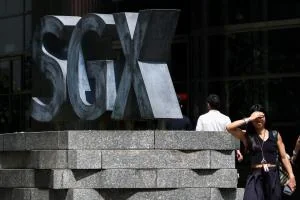
Positive news from the U.S.-Iran talks significantly lifted Asian stock markets, especially the Singapore Straits Times Index (STI), which posted solid gains. At the same time, sentiment in the Singapore REIT market improved, indicating that funds are moving from safe-haven assets into risk assets. This round of capital rotation has put direct pressure on precious metals: when risk appetite improves, investors tend to reduce holdings of non-yielding assets such as gold and silver and reallocate to income-generating assets like equities and REITs.
Notably, this seesaw effect is not perfectly linear. Gains in Asian stocks are often accompanied by swings in the U.S. dollar index, which usually moves inversely with precious metals. Recently, the dollar has weakened somewhat on the back of the talks, which in turn has supported gold priced in dollars. As a result, precious metals have shown some resilience even as stocks rise—for example, on June 26, gold first dipped and then rebounded, ending the day slightly higher, highlighting the tug-of-war between bulls and bears.
From a broader perspective, the rebound in Singapore REIT sentiment reflects stronger confidence in economic recovery. As a financial center in Asia, Singapore's REIT market is highly sensitive to interest rate expectations. With geopolitical risk easing on the back of the U.S.-Iran talks, expectations that the Monetary Authority of Singapore (MAS) will maintain accommodative monetary policy have risen, boosting REIT performance. However, over the longer term, accommodative expectations may lift inflation, and inflation is precisely a long-term positive for gold and other precious metals. In the short run, then, stronger risk appetite weighs on gold prices, but medium- to long-term inflation expectations provide support.
Internal Divergence Within the Precious Metals Market
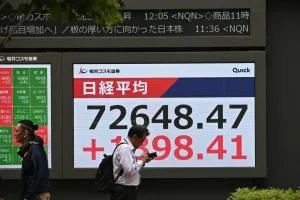
Under the backdrop of overall market swings, performance across precious metals has clearly diverged. As the king of safe havens, gold has moved more steadily, with geopolitical tensions and rate expectations exerting a dual influence and a relatively tighter trading range. Silver, by contrast, has both precious-metal and industrial-metal characteristics, giving it greater price elasticity amid expectations of a global manufacturing recovery. The U.S.-Iran talks lifted Asian stocks, especially technology and industrial sectors, indirectly strengthening expectations for industrial demand for silver and leading silver to outperform gold at one point.
As for platinum and palladium, both are mainly driven by demand from the auto industry. Progress in the talks eased concerns about supply chain disruptions, but the transition to new energy vehicles continues, and the demand structure for platinum-group metals is changing. Data show that platinum has recently traded in a narrow range, while palladium has rebounded technically after an earlier oversold slide, with a weaker direct link to the U.S.-Iran talks and more of a reflection of sentiment repair.
In addition, changes in gold ETF holdings are worth watching. As Asian stocks recovered, SPDR Gold Shares, the world's largest gold ETF, saw a small net outflow, but the outflow was limited, suggesting that long-term investors have not left in large numbers. This implies that the safe-haven value of precious metals has not been fully abandoned, and the market is still waiting for the final outcome of the U.S.-Iran talks.
Conclusion: Precious Metals Search for Direction Amid Uncertainty
The progress in U.S.-Iran talks has injected a wave of risk appetite into global financial markets, but precious metals have not therefore entered a one-way downtrend. In the short term, rising appeal of risk assets such as stocks and REITs has indeed suppressed speculative demand for gold and silver; however, residual uncertainty around geopolitical risk, a weak and range-bound U.S. dollar index, and higher long-term inflation expectations together form a floor under precious metals.
Looking ahead, investors should closely monitor how the U.S.-Iran talks are implemented. If an agreement is reached and carried out smoothly, tensions in the Middle East will see a meaningful easing, and gold could drift further down toward around $1,800 per ounce, while silver may hold up better thanks to support from industrial demand. Conversely, if the talks break down, safe-haven sentiment will surge immediately and precious metals may resume their uptrend. At the same time, whether the rally in Asian stocks can continue will also affect precious metals through capital flows.
For professional investors, this stage is suitable for a long-short hedging strategy, with allocations between gold and silver and the use of options to manage geopolitical risk. Precious metals never move on a single factor; instead, they seek an equilibrium in a four-dimensional framework of economic growth, interest rates, geopolitics, and risk appetite. The U.S.-Iran talks are only one of the key variables in the near term, not the endpoint.